
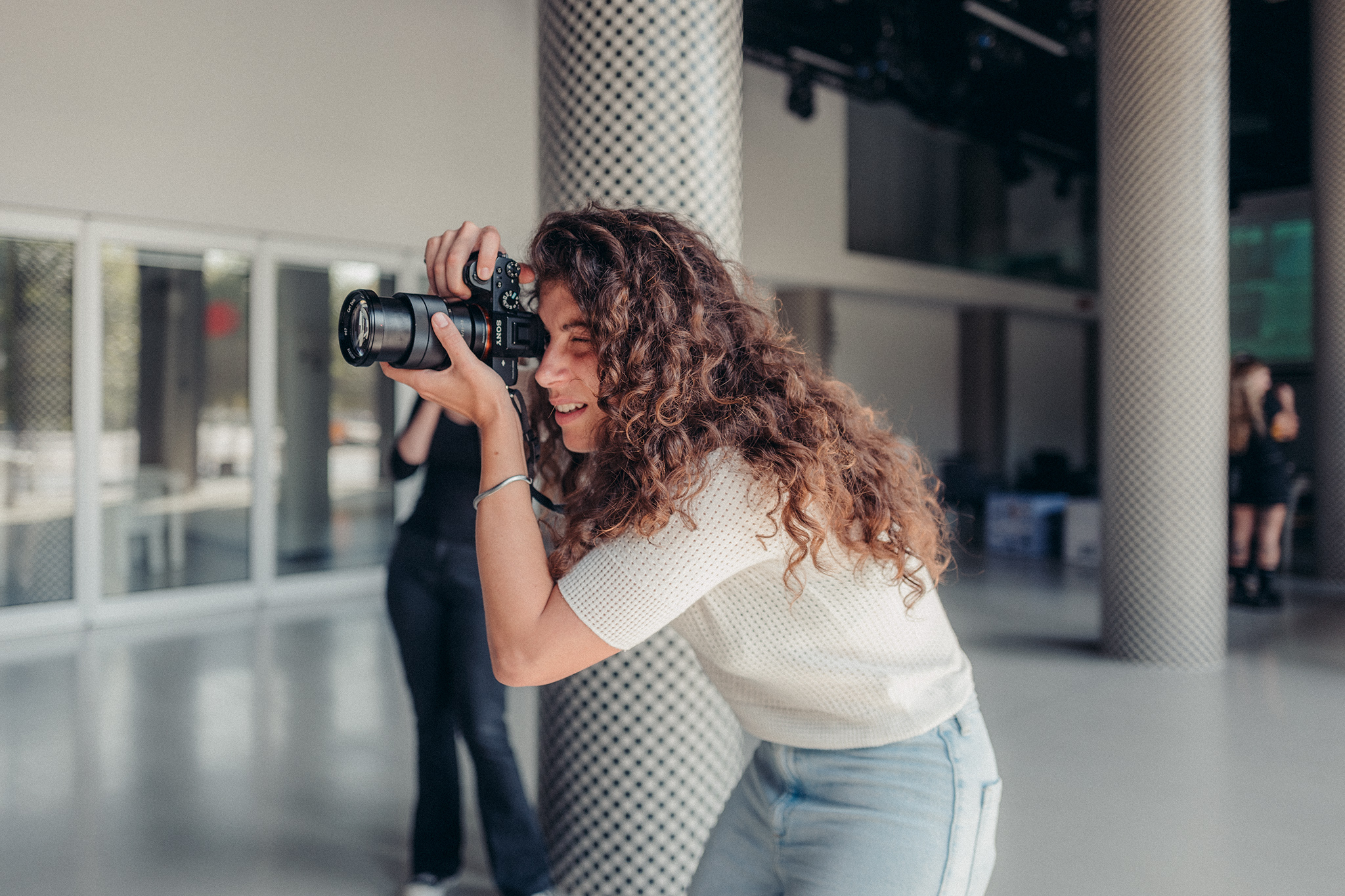
Currently lives and works in: Vienna, Austria
Practice: Photography, workshop
I like people, and I’m interested in telling stories. My main medium is photography, but I also write short stories. To me, these two forms aren’t so different—they allow me to explore the same subject from different angles, offering varied ways of analysing reality.
I try to remember and shape my reality through images and words. These tools help me investigate what lies beneath the surface—how people connect with one another and, often unconsciously, how they shape the spaces they inhabit. Through my work, I aim to explore how we live together, how we change, and how we leave traces.
I’m drawn to art as a form of social practice because I believe it’s a language that can foster connection without imposing boundaries, regardless of who we are or where we come from.
Why are you a part of Magic Carpets: Because it gives me the opportunity to work on photography while connecting with communities, promoting inclusion, challenging myself creatively, and meeting inspiring new people along the way.
Magic Carpets project
This photography workshop is designed to create a bridge between the local community of Wrocław and the Korean community living there. Through two powerful forms of photography—food and portraits—we explore connection, identity, and shared experience. Food photography celebrates culture and hospitality, while portraits capture the depth of human encounters. The workshop will culminate in a small magazine featuring selected photos taken by participants, to be shared across the city and spark new connections beyond the lens.
Past project
Cityscapes – Digital Museum of Memory
Type: Sound recording—Photography—Workshop
A project I’m proud of is Cityscapes–Digital Museum of Memory, created by artist Valeriana Berchicci and the association “CAP–Cities Art Projects”. While the artist’s focus was on audio memories, I contributed to the project by documenting it through photography and organising the workshops. These workshops took place in four marginalised neighborhoods on the outskirts of Rome and involved both children and adults. With the children, we explored themes like belonging, representation, and how to include their perspectives in reimagining public spaces. With the adults, we walked through the neighborhood using analog cameras to capture hidden details—small elements they felt truly represented their sense of place. It was a powerful reflection on memory, identity, and community.
What inspires you as an artist? I’m inspired by the ordinary moments that reveal something unexpected—how a gesture, a glance, or a detail in a landscape can tell a bigger story. I’m drawn to the invisible threads between people and places, and to the quiet transformations that happen over time. Memory, relationships, and the subtle interaction between humans and their environments are at the heart of my research. I’m also deeply influenced by literature, especially authors who blur the line between reality and imagination
What do you think is the purpose of art? I see art as a multilingual tool—like language, it can cross borders, express the unspoken, and give voice to hidden stories. I’m especially interested in minority languages and their rights, and I find a strong parallel in how art can preserve and share perspectives that risk being lost.
Art creates an intimate space between the artist and the audience. Starting from a personal or particular experience, it can speak to something much larger—turning the individual into something collective and universal.
Contacts
Email: Marina.pietrocola[et]gmail.com | Instagram