Closeness. Otherness.
Paulina Brelińska-Garsztka
The K-Community residency programme, conducted by the Wrocław Institute of Culture, continues the process of observing and getting to know the Korean community in Wrocław and Bielany Wrocławskie (a large village located just south of Wrocław), while exploring opportunities to build relationships through contemporary art.
In its second year, the project builds on activities initiated during the first edition, continuing its long-term exploration of models for intercultural cooperation. Rather than creating an image of a closed community or attempting to offer a definitive representation of it, the project seeks to find ways of paying closer attention to the community’s presence in the urban landscape and to the individual stories of its members. This takes time, openness and a willingness to make contact, as relationships with a community cannot be established overnight.
The Wrocław Institute of Culture approached the second edition of the artistic residency in Wrocław as an opportunity to deepen its previous observations and further develop artistic practices grounded in encounters with others and the search for common ground. In this context, the encounters themselves become as important as the artworks produced by the invited artists.
Marilyne Grimmer’s Project
Rašymas
At the centre of this year’s residency programme is Marilyne Grimmer’s engagement with Koreans living in Poland, as well as with Polish people working with Koreans and interested in fostering cooperation between the two countries. Her practice developed through personal encounters, critical observation of her surroundings and a gradual process of learning about stories that do not always emerge in an initial conversation. The artist faced time constraints, as an ideal version of the project would have involved several months of journalistic research. Over the course of the four-week residency, she sought out fragments of knowledge, gathering them through individual meetings with various people and visits to places associated with Korea across the city and its outskirts.
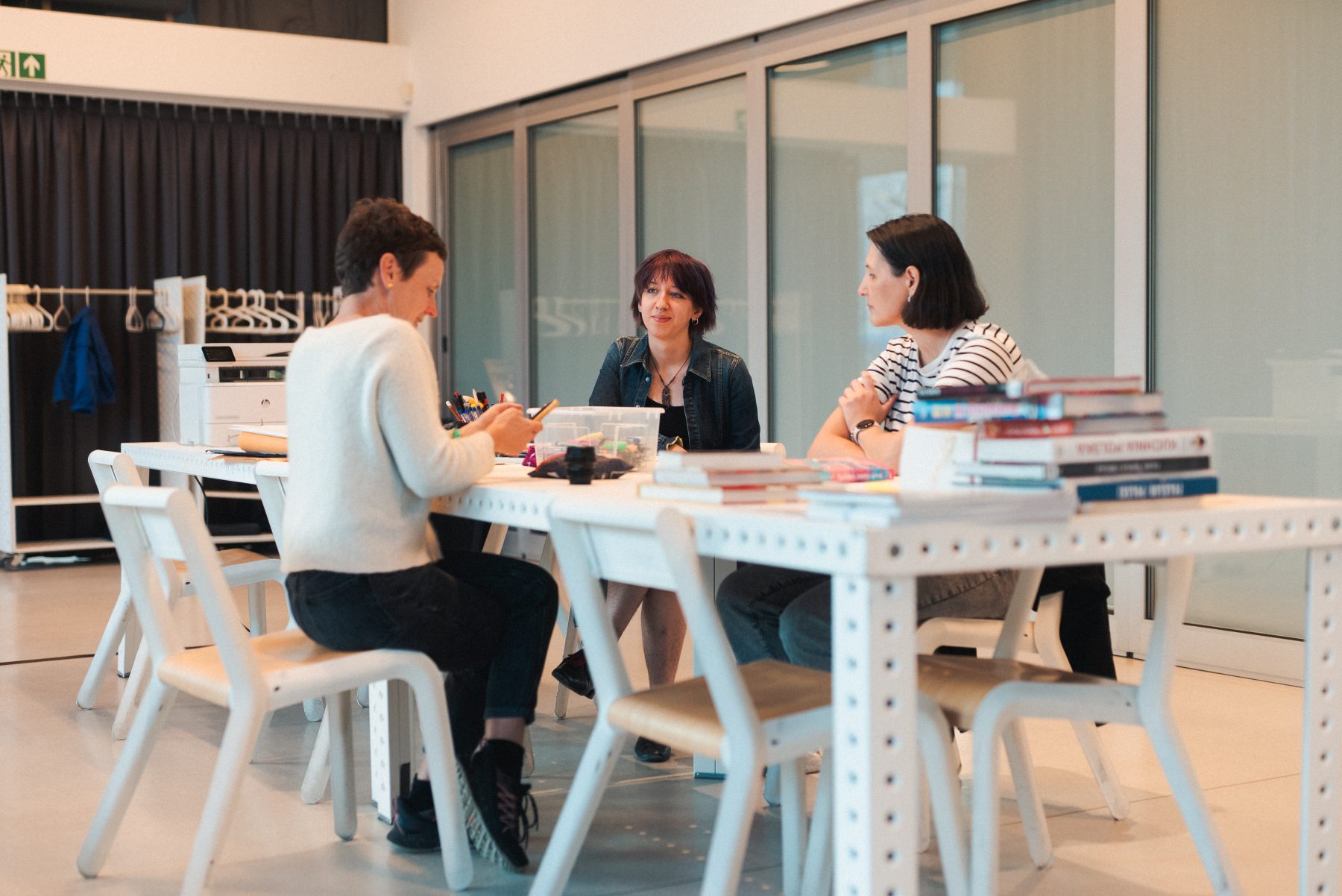
The artist focused on couples in which one partner is from Poland and the other from Korea. She was interested in what happens between two people from different cultural backgrounds, and how their differences and similarities shape their communication and intimacy. Conversation was central to the process, making it necessary to build rapport with the couples gradually. Getting to know a new community takes time, attentiveness and trust – none of which can be established simply by expressing a desire to connect with others. When it comes to experiences of migration, living between cultures and navigating life in a foreign country, sharing personal stories often depends on a sense of safety and the development of a friendly, sometimes even intimate, relationship. The artist encountered situations in which the experiences she hoped to explore remained inaccessible, and attempts to arrange meetings did not always lead to the expected outcomes.
This aspect of the residency is particularly important because it reveals the contrast between investigative curiosity and the gradual process of building relationships. The artistic inquiry did not follow a linear path, and its success did not depend solely on the artist’s engagement. Initiating contact, striking up conversations, seeking people willing to share their experiences, and accepting refusals or a lack of response all became part of the artistic process. This required the artist to step outside her comfort zone, both socially and artistically. She had to accept that not all stories could be heard, not all meetings could take place, and some areas of knowledge would remain inaccessible.
From meetings to images
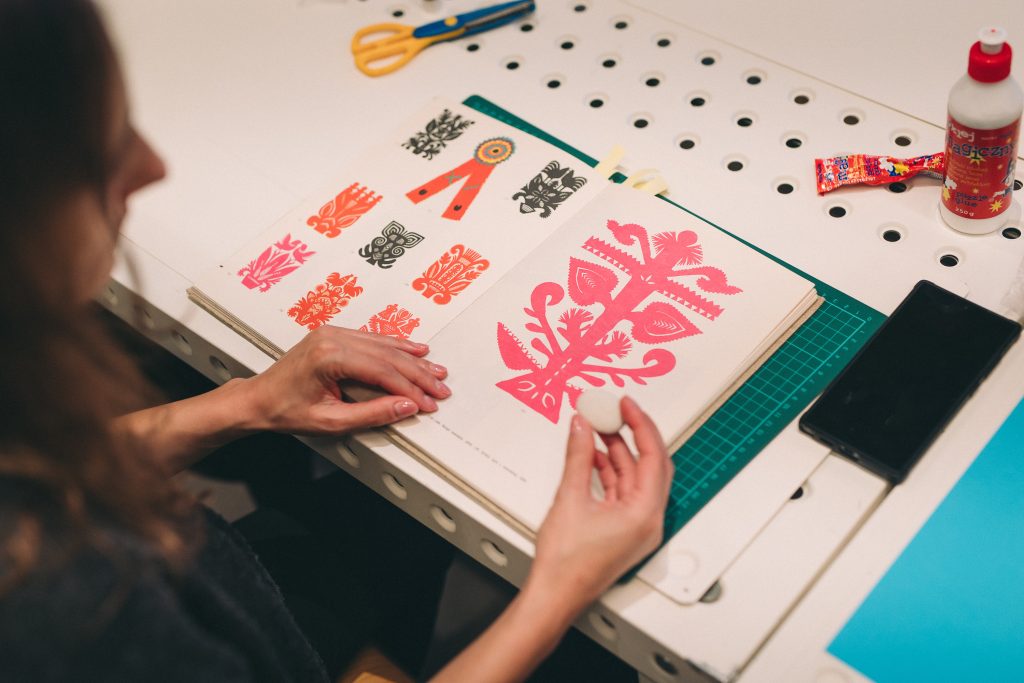
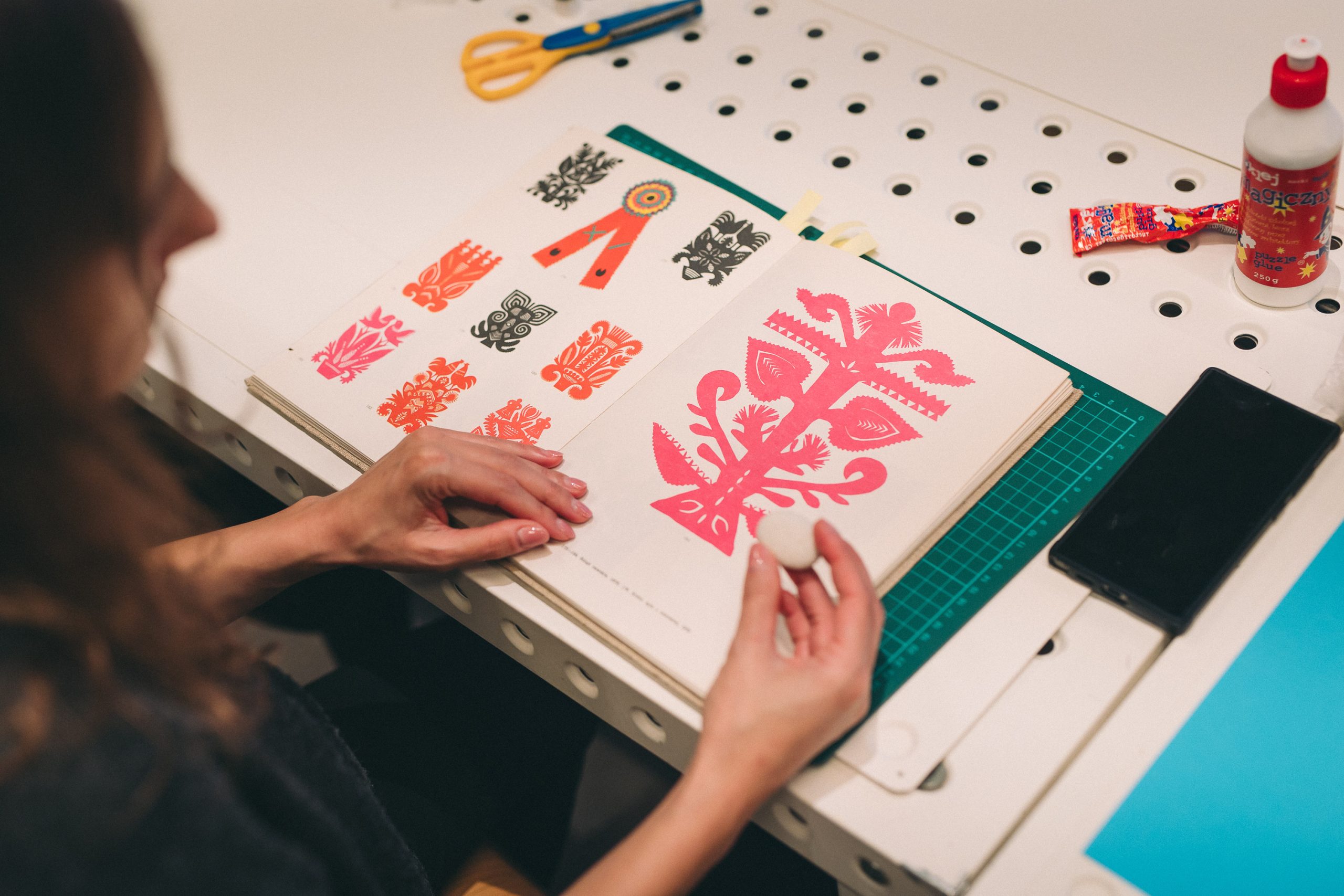
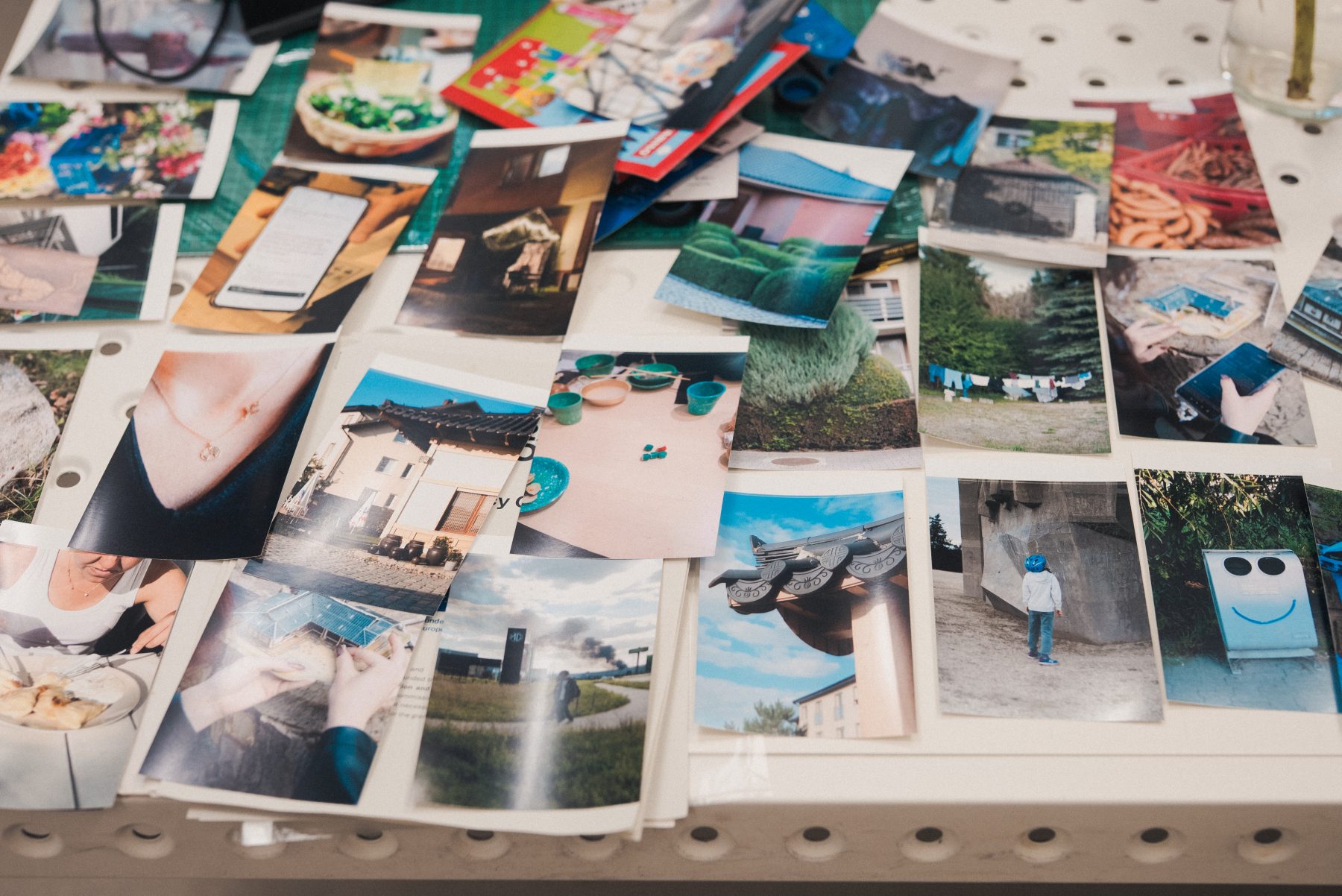
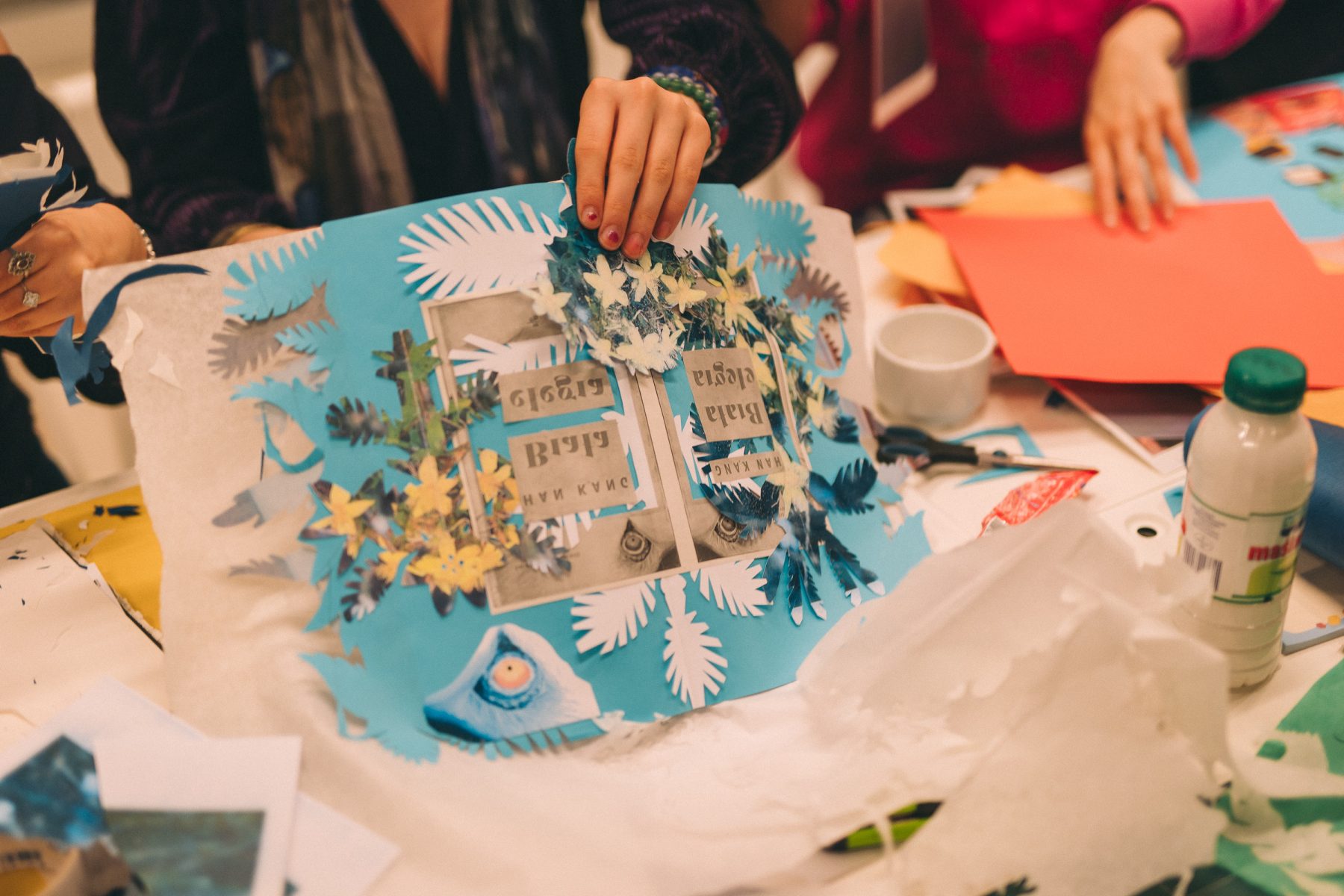
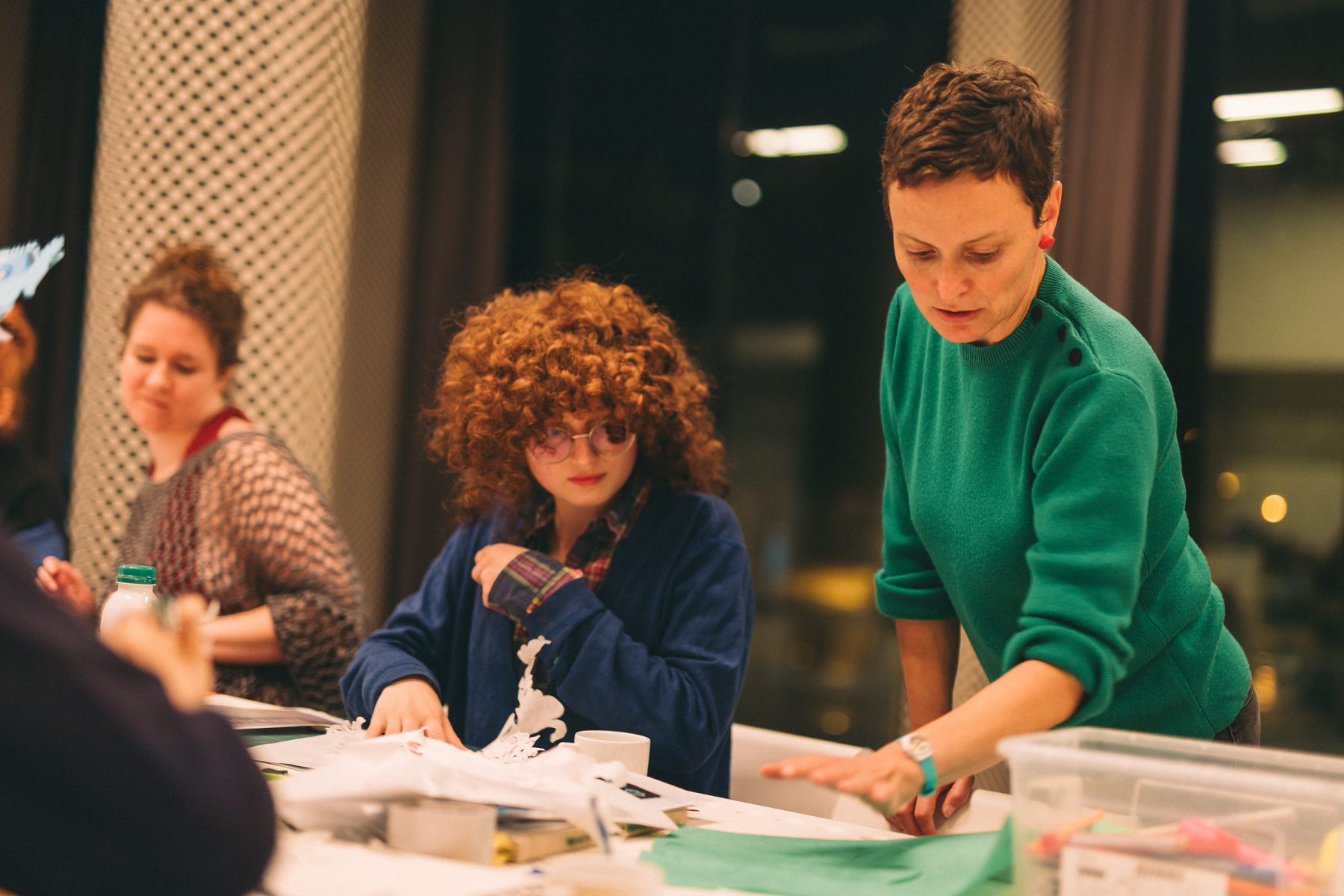
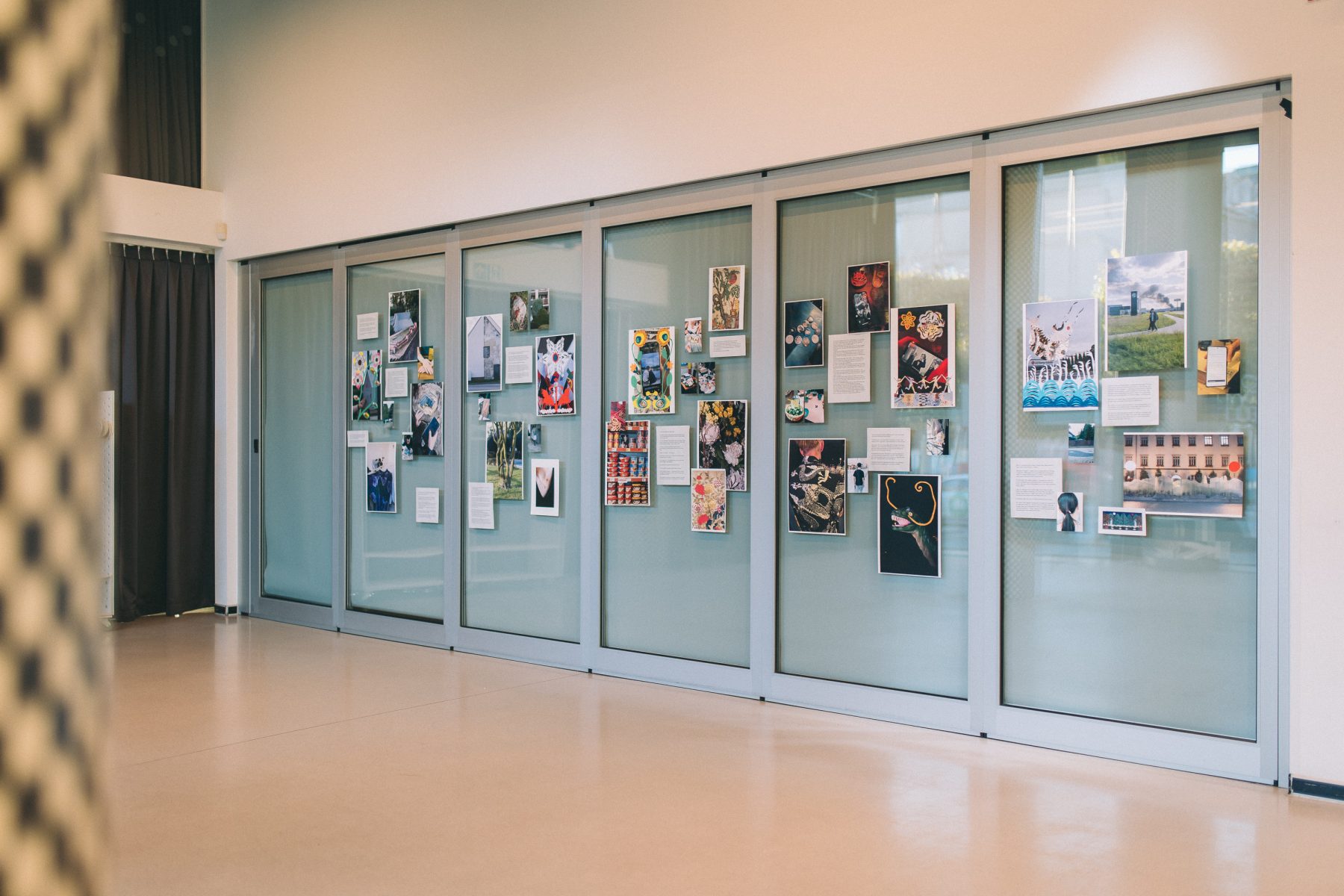
A key dimension of the project was its connection to the local context. Wrocław and Bielany Wrocławskie feature not as neutral backdrops to stories of migration, but as places where personal experiences intersect. Here, people from Korea go about their daily lives, form relationships with Poles, find jobs, start families and build lives in Poland for various reasons. Within the residency, images became an alternative means of storytelling. Marilyne Grimmer brought together photographs she had taken in a series of seven collages, drawing on the tradition of folk paper-cutting and combining the images with colourful Korean paper. An important part of the process was her participation in an individual paper-cutting workshop led by Ukrainian artist Julia Datchenko. Grimmer explored symbols, places, objects and details of the surrounding environment as potential carriers of meaning, bringing together visual references and aesthetics from two cultures. She also led two open collage workshops at the Wrocław Institute of Culture’s headquarters.
Koreatown as a background for discussions
One key part of the artist’s research involved a visit to LG Energy Solution in Biskupice Podgórne. Conversations with interpreters and the communications team there focused on the similarities and differences between Polish and Korean cultures, and on how cultural backgrounds affect work. For the artist, the corporate environment became a field of inquiry, as it combines formal organisational structures with everyday, informal relationships. On the one hand, there is a defined system of procedures, hierarchy and rules for communication. On the other, the daily rhythm depends on people, their interpretation of situations and their communication skills in three languages: Polish, English and Korean. The meeting at the company’s headquarters also showed that interpretation does not always mean translating one word into another. In an intercultural context, it may also involve explaining gestures and body language.
Every action the artist took can be seen as a small-scale investigation through images, conversations, and observation. This practice could be described as ‘collecting traces’. An essential part of her work involved actions that do not always leave physical traces or feature visibly in the artistic project. Seeking contacts, initiating conversations, waiting for replies, and getting to know places remained crucial behind-the-scenes aspects of the project. Through these actions, the artist gradually built her own points of reference, and the artistic process began to take shape. Knowledge accumulated gradually, and there is still more to discover.
Postcard
The artist arrived in Wrocław with the intention of learning from people connected to the Korean community in the city and its surroundings. Her previous knowledge of Korea was based, among other things, on a visit to the country twenty-five years ago. However, this did not mean that she was familiar with the present-day life of the Korean community in Wrocław or with the experiences of people whose lives unfold at the intersection of two cultures. Marilyne Grimmer took an exploratory approach, initiating conversations, proposing meetings and gradually establishing relationships that helped her gain a better understanding of the local context.
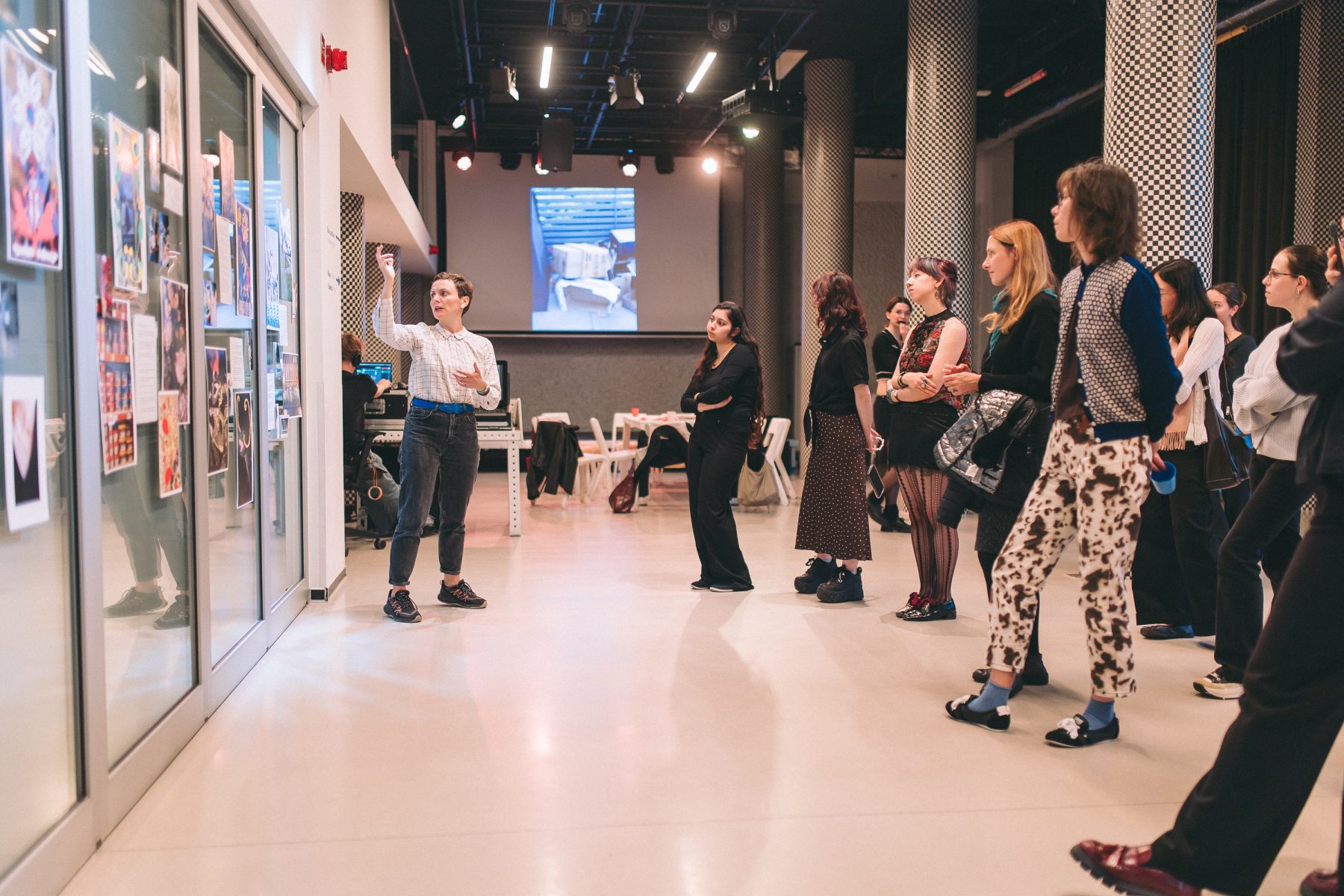
The residency is brought together in a series of seven collage postcards, presented on 10 October during Korea Day, the first urban gathering dedicated to Korean culture organised in Wrocław. The postcards were distributed among members of the Korean community, making the presentation of the works not only an opportunity to share the outcomes of the residency, but also a further step in developing and maintaining relationships.
In this sense, the residency forms part of a longer process of getting to know the community and building mutual trust over time.