As spring approached and the 2026 OPENART exhibition drew closer, we invited two artists and one artist duo to take part in residencies in our city, working with local communities through a series of workshops. The artists collaborated with different groups connected to St Nicholas Church, each approaching their residency in their own way. All three projects resulted in artworks that were later presented as part of this year’s exhibition, engaging a wider audience in the heart of the city’s public space.
The exhibition coincided with Sweden’s election year, and several of the artworks attracted considerable attention, contributing to public discussion and political debate. The OPENART exhibition is not defined by a fixed meaning or purpose. Its themes emerge and evolve through the artists’ freedom to create, and the resulting works often reflect questions of democracy, humanity and sustainability.
Ieva Saulite
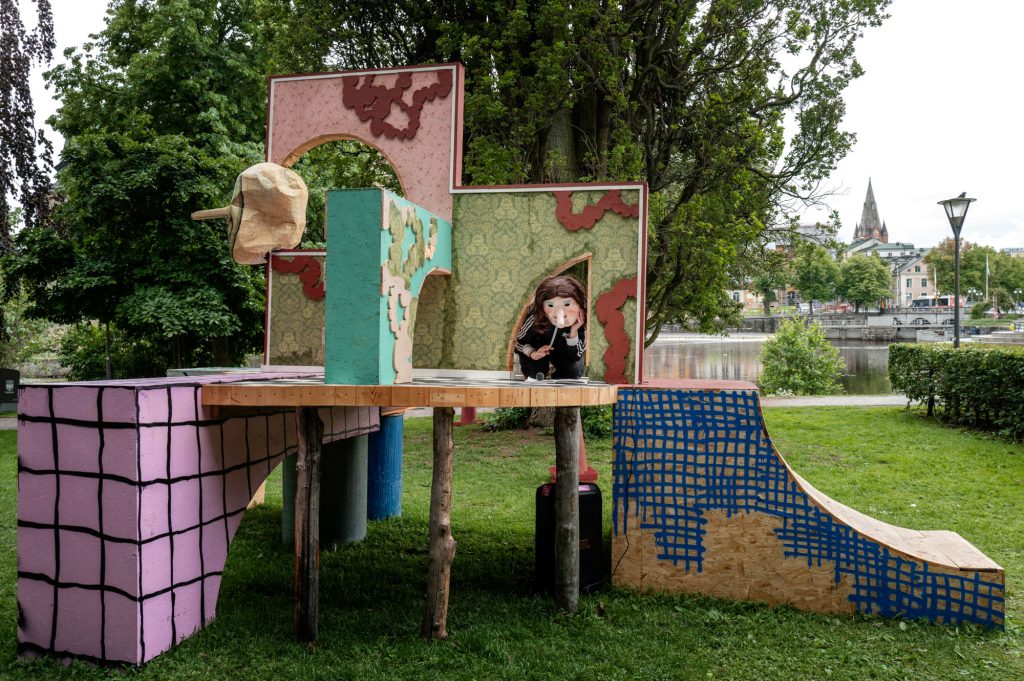
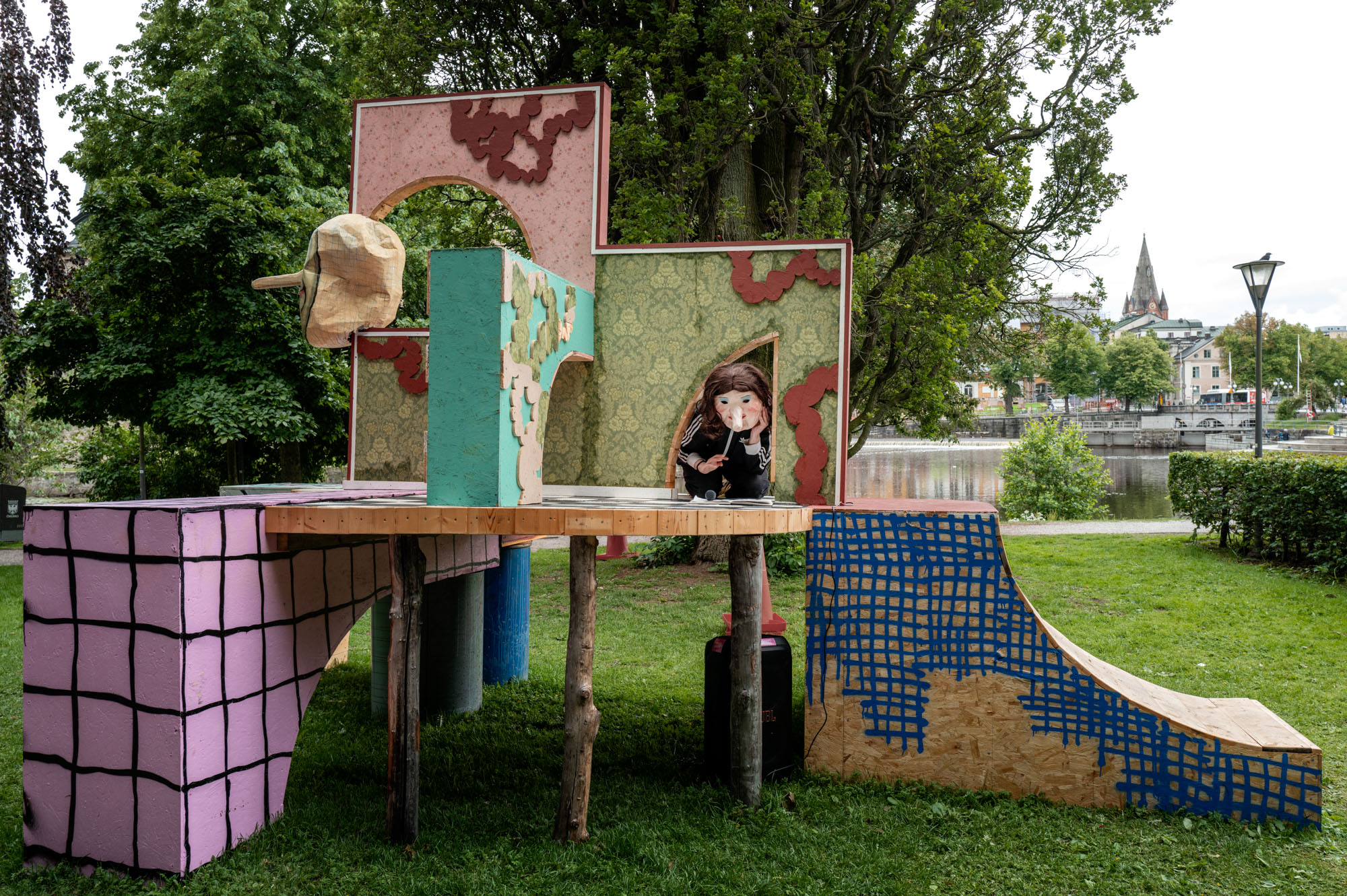
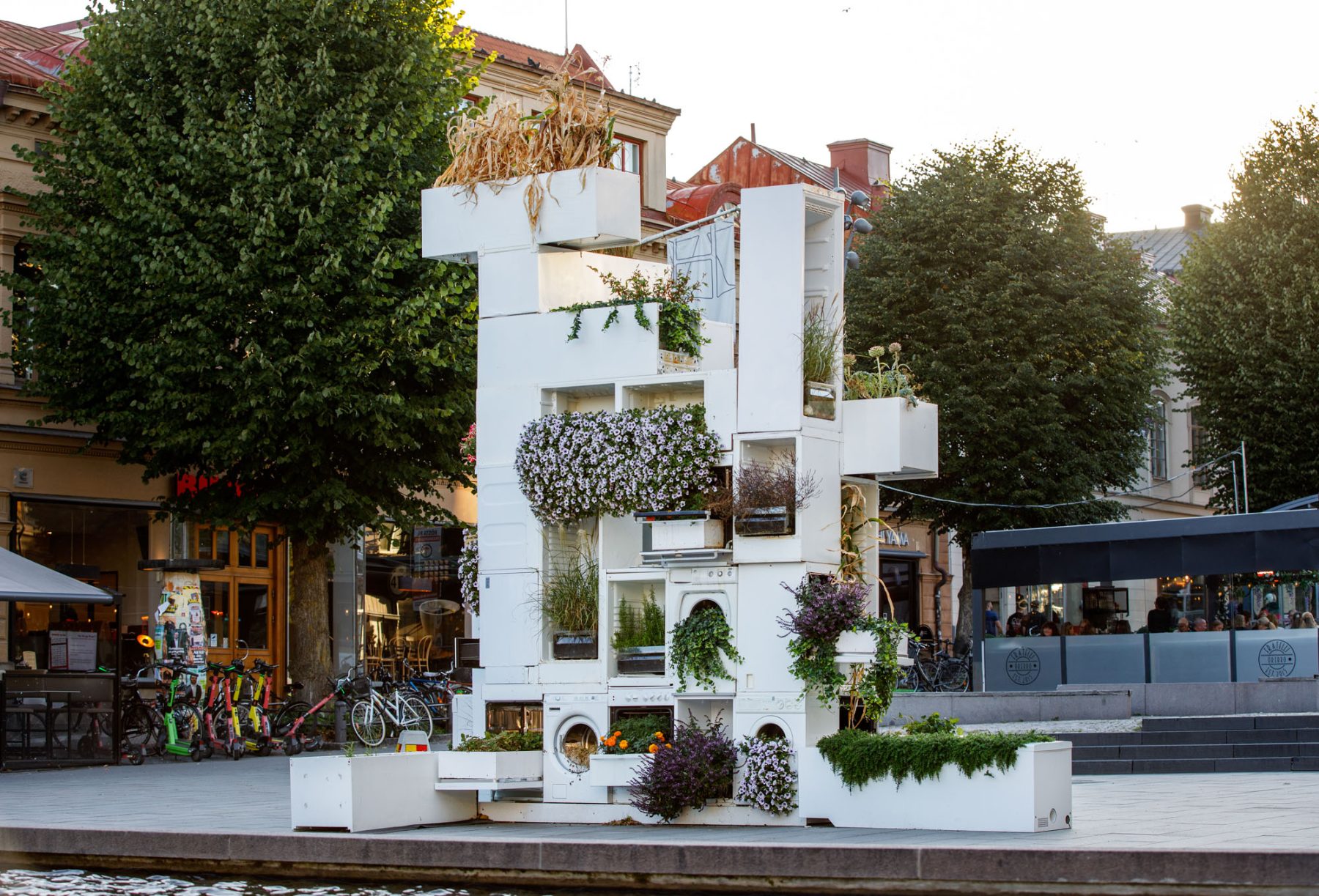
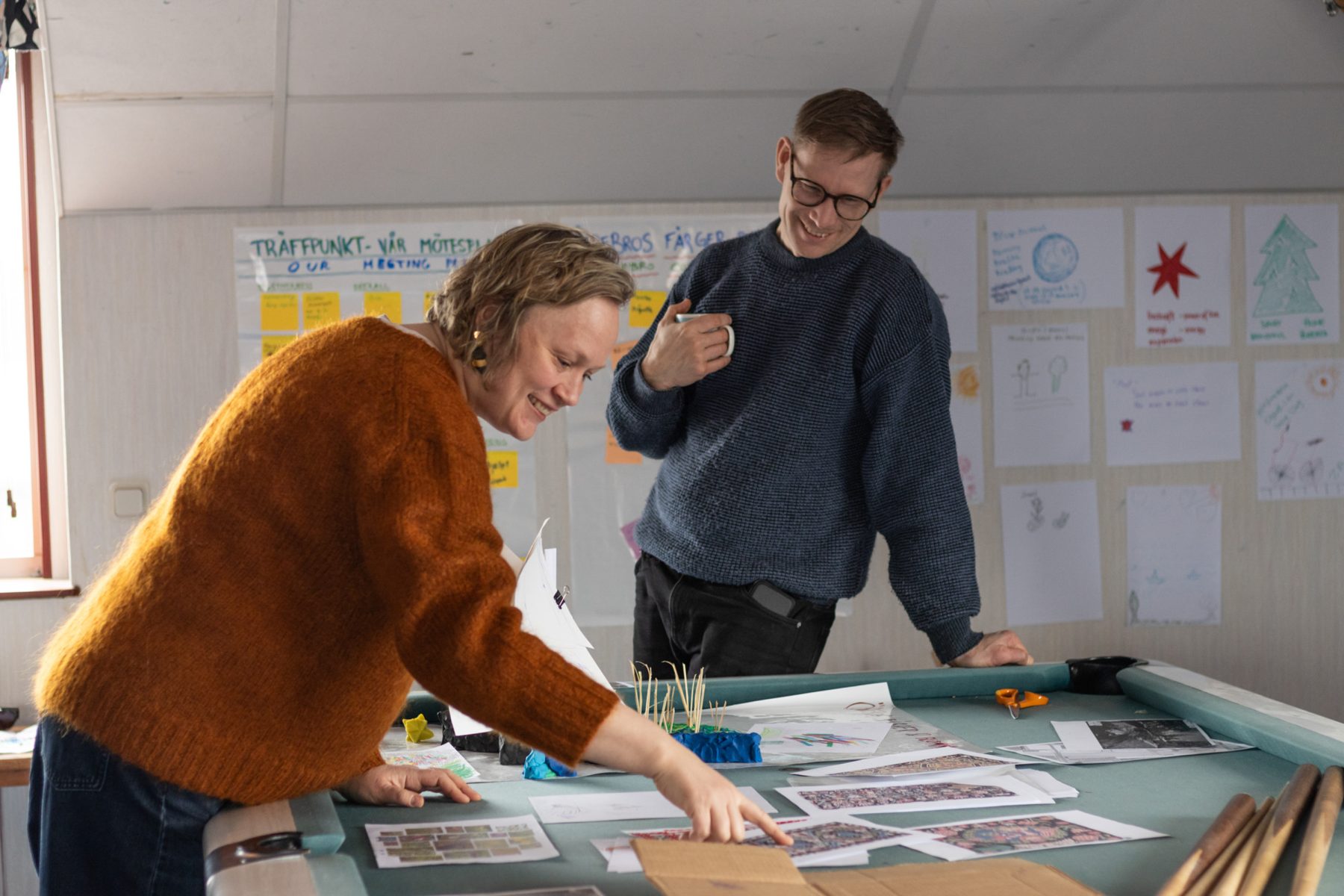
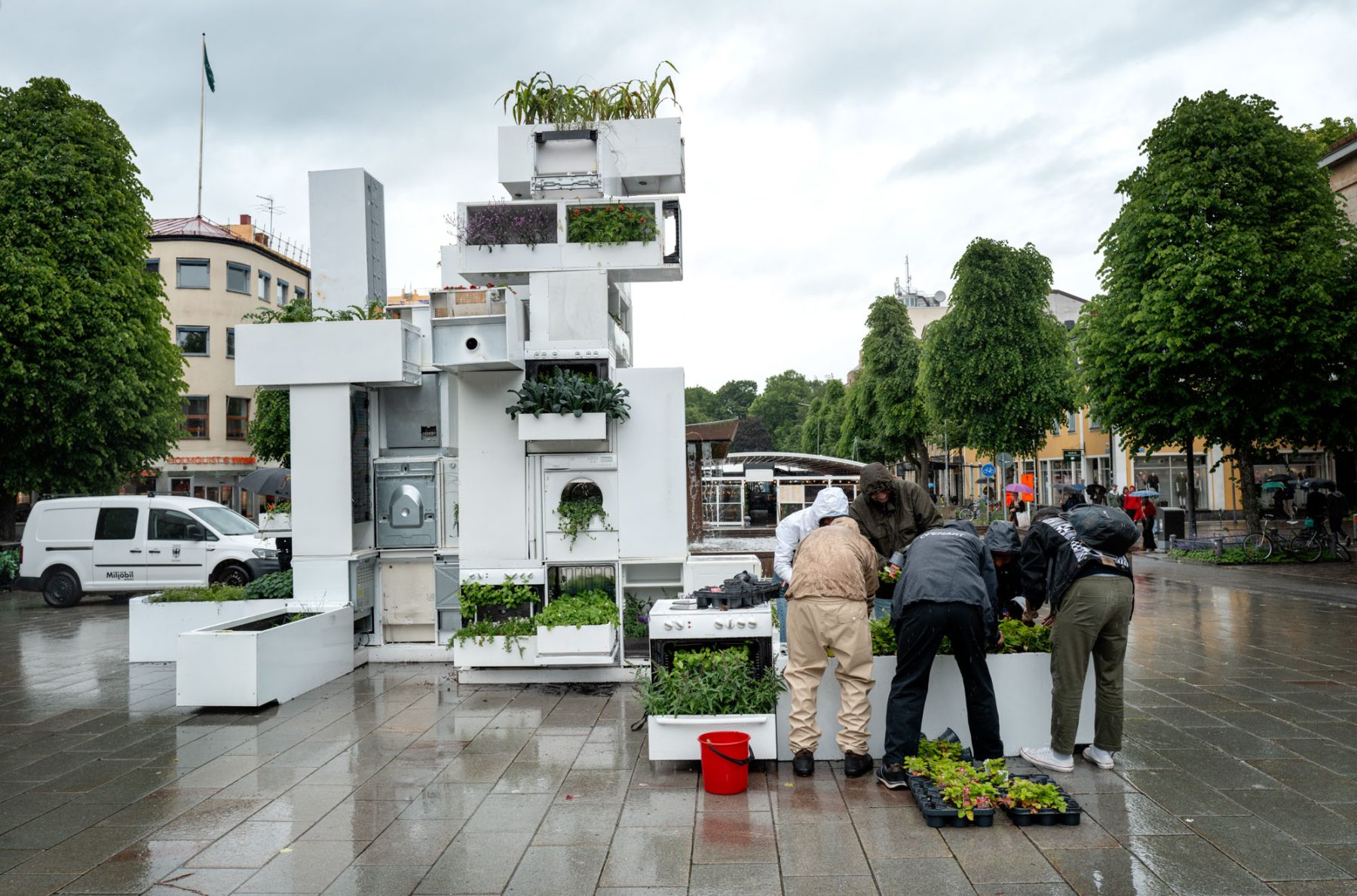
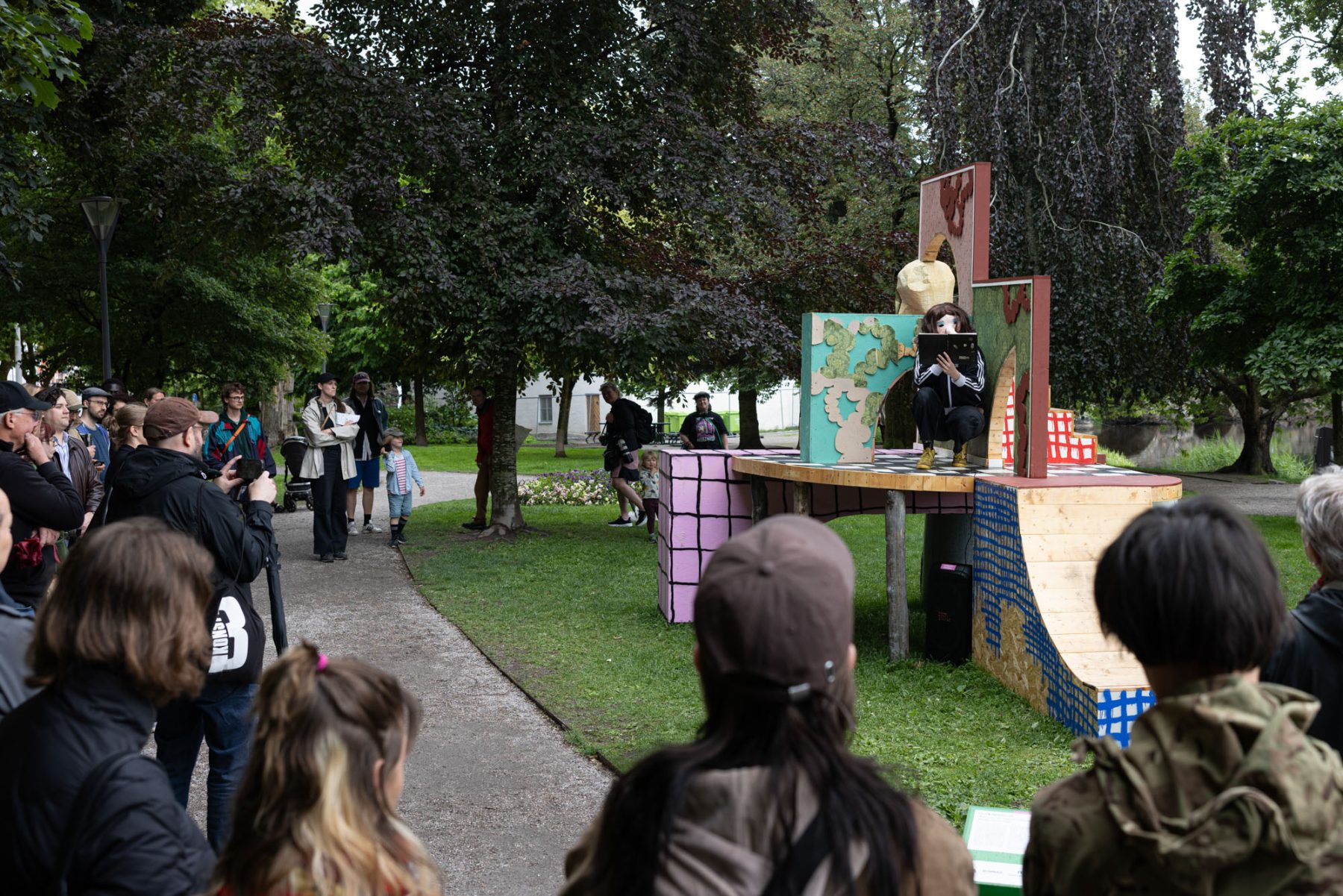
Ieva worked in collaboration with the Träffpunkt community at St Nicholas Church. Throughout the residency, participants from Träffpunkt played a central role in shaping the project through conversations, shared experiences and creative exchange. The collaboration resulted in an artwork titled Past Present Continuous.
Drawing on stories of childhood, gardening, everyday life and personal memories, the residency created a space where different perspectives could meet. Set within the landscape of Strömpisön, the installation celebrated Träffpunkt’s ongoing work to foster connection, participation and belonging. More than a physical structure, it was a manifestation of life in which memories, skills and experiences were shared and passed on. Past Present Continuous highlighted how collective creativity can strengthen social bonds and create meaningful encounters between people, connecting the past with the present and what is yet to come.
Marja-Leena Sillanpää
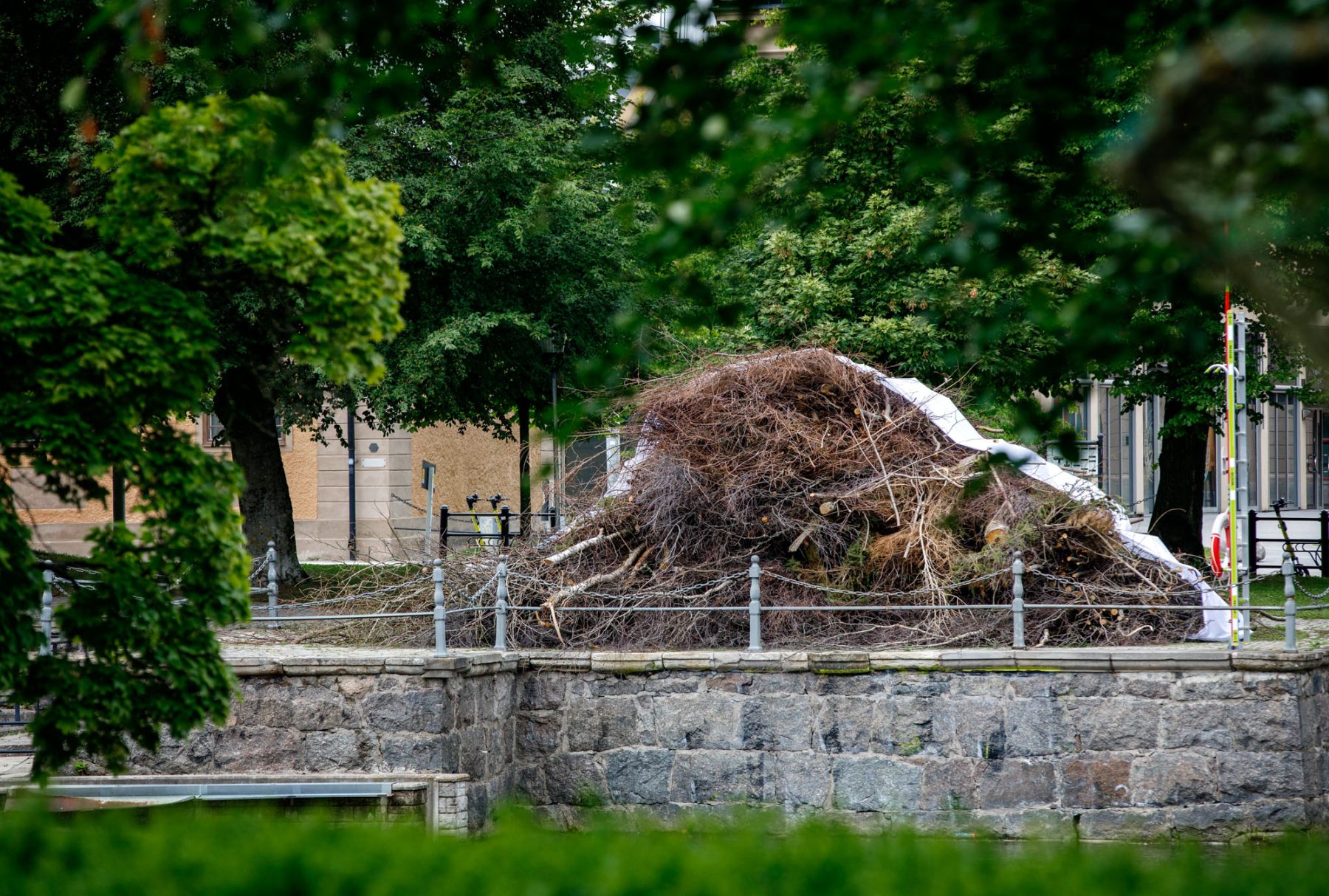
During her residency, Marja-Leena Sillanpää developed a multidisciplinary artwork exploring grief, nature and human presence through installation, sound and performance. The work was titled A Temporary Space Between a Forest Edge and the Ground.
At the centre of Marja-Leena’s work was a large pile of branches, brushwood and twigs, reminiscent of the heaps of residual material left behind after clear-cutting. Like an unidentified object that had suddenly landed among us, the structure appeared both familiar and strange. Covered with joined sheets that served as a protective shroud, it evoked both care and loss, concealment and revelation.
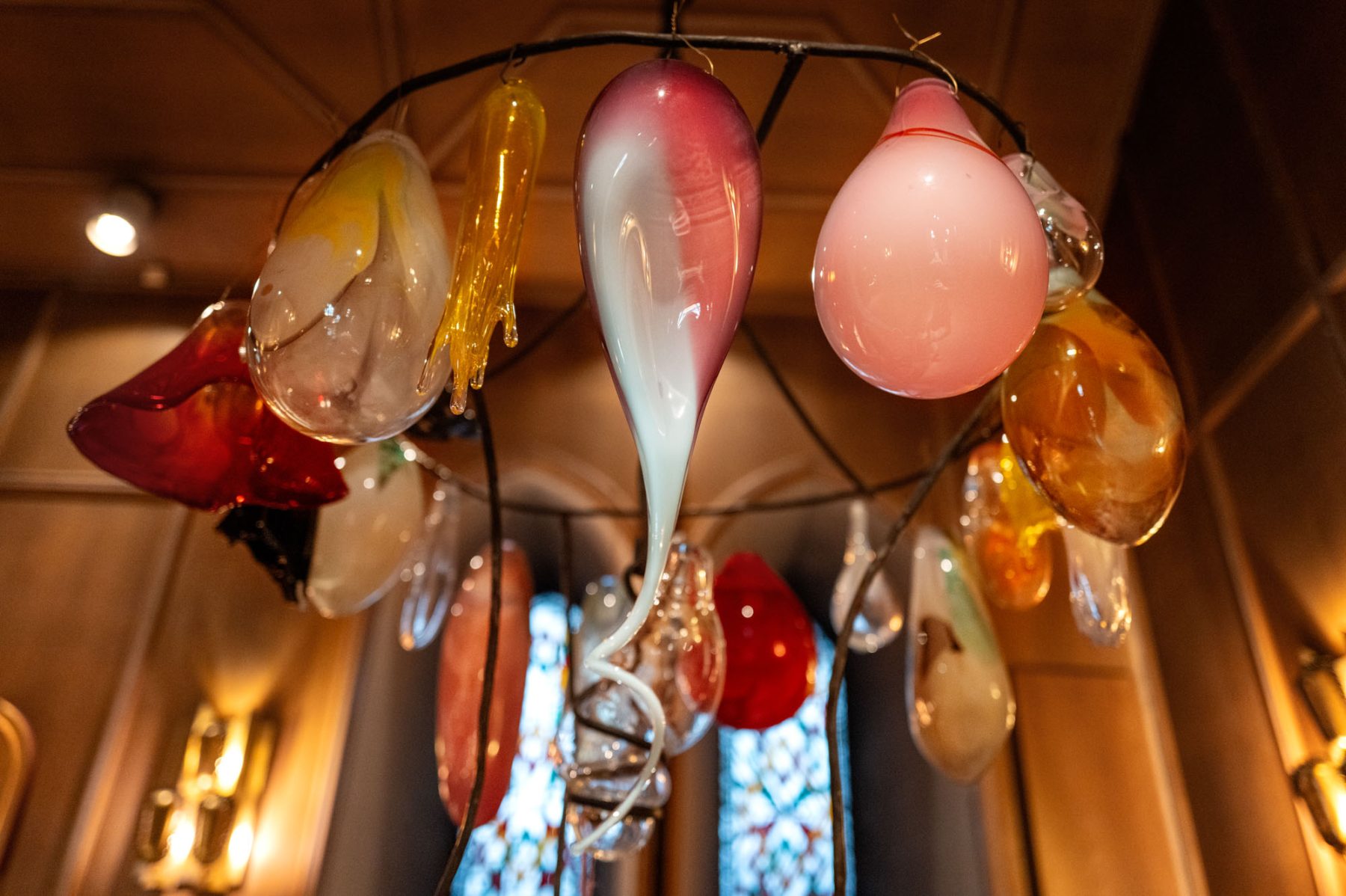
In collaboration with the youth choir VOX, young voices became an integral part of the artwork, which culminated in a mourning procession departing from St Nicholas Church on the final day of the exhibition. Visitors were invited to activate a sound within the pile, allowing the choir’s voices to resonate and extend into the surrounding urban environment. Through this encounter, something that might otherwise have remained at the margins of everyday awareness became present, audible and difficult to ignore. The artwork comprised three elements: the pile, nine ferulas inside St Nicholas Church, and the performance on the final day of the exhibition.
Tova Lilja & Emil Faisal
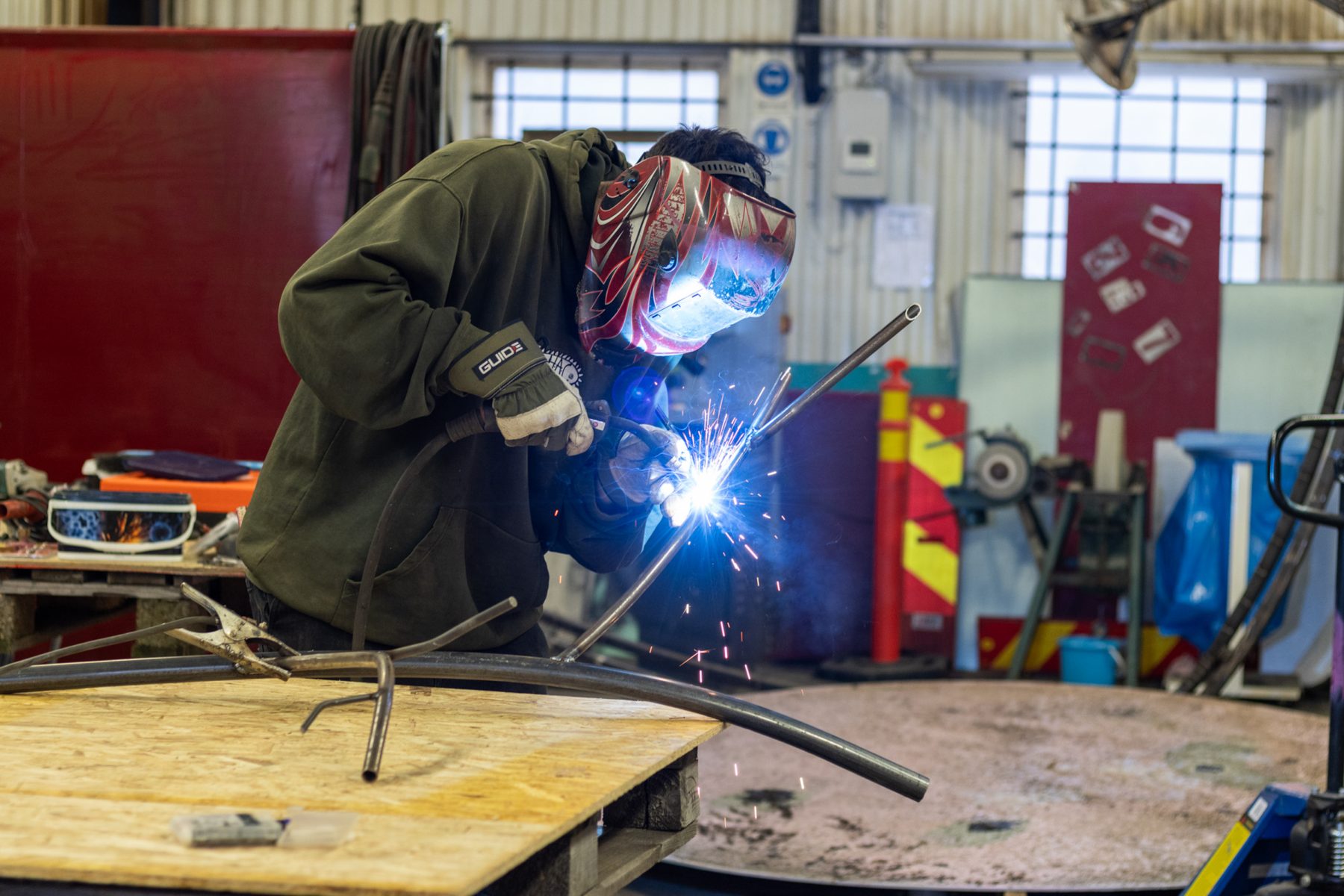
During their residency, Tova Lilja and Emil Faisal Hasselberg developed a collaborative artwork inspired by the waters of the Svartån river.
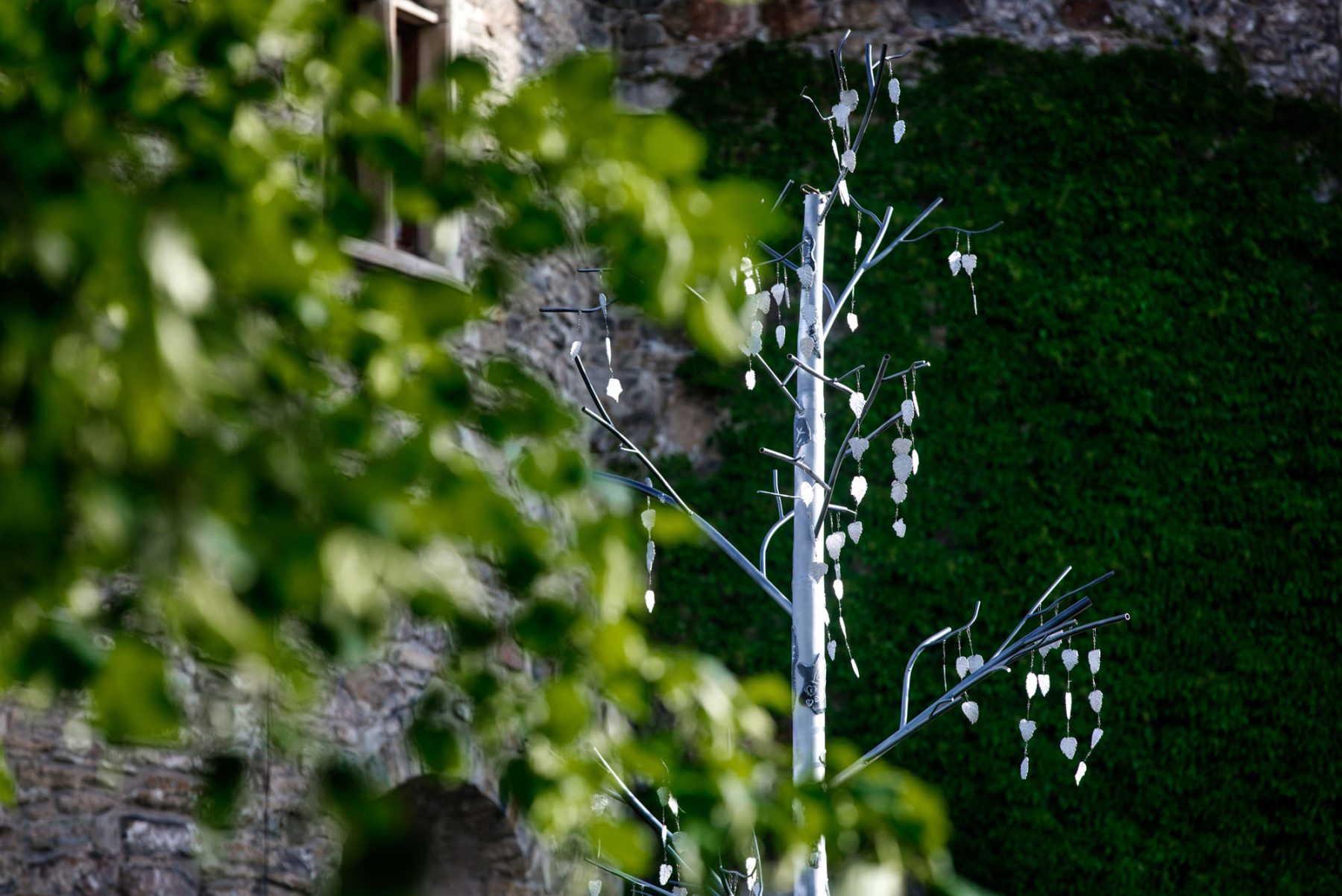
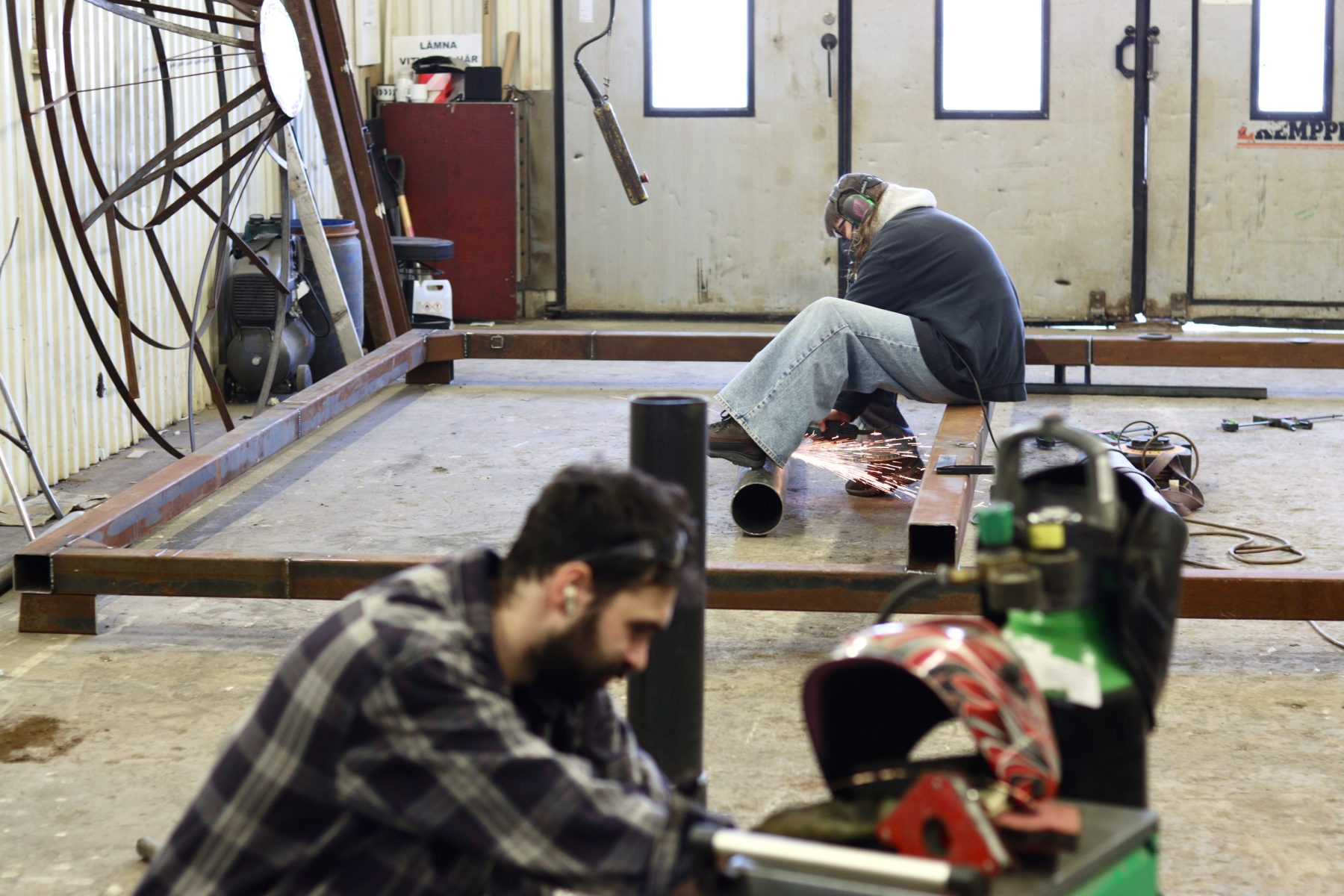
A seven-metre-high metal tree reached towards the sky, while its intricately crafted metal leaves responded to the wind, creating a subtle, shimmering soundscape that changed with the movements of people and nature around it. Through workshops with confirmation students from St Nicholas Church, the artists explored ideas of memory, belonging and the traces we leave behind in shared spaces. The students created unique wooden markings and impressions, which were later transferred onto the sculpture’s metal surface. The tree’s bark bore the marks of many hands, transforming individual gestures into a collective memory.
Through careful craftsmanship and a shared artistic process, the participants became co-creators of the artwork, embedding their experiences in the site itself. In this way, the sculpture not only reflected the artists’ vision but also celebrated the voices and contributions of a younger generation.