“Trails Through the Yard” is a community-based art project exploring how we experience different spaces – whether they feel safe or unsettling, familiar or unfamiliar – and how we can find happiness and a sense of belonging both in our own company and among others.
Paths through the yard, through the woods, across a blooming field, through familiar surroundings, the park of our childhood, towards the river, up the hill, home. We carry these paths in our memories for a long time, sometimes for a lifetime, as places filled with warm recollections that can bring us back to ourselves. The war has changed our familiar routes and led many people to reconsider their relationship with place. At the same time, memories of familiar landscapes, childhood walks, favourite paths and meaningful places continue to shape our sense of belonging. “Trails Through the Yard” is dedicated to exploring landscapes of memory, personal routes and the ways in which we build connections with places and people.
Together with the artists, participants explore different spaces, revisit memories of places from their childhood, share their own stories and seek new ways of interacting with the landscape through artistic practices. The programme includes a series of meetings, walks, conversations and creative activities, in which the process of collective exploration, creative expression, mutual care and trust is central.
The residency began with an open call for international artists, followed by the selection of both local and international participants. An initial online meeting brought together all three artists, the curator and the residency manager to introduce the project and discuss its direction. This was followed by a research trip to Lviv, which included a visit to Jam Factory, meetings with potential project partners and collaborative brainstorming to develop ideas and plan the residency. Each artist then undertook their residency period, with the main working phases taking place on site at Jam Factory. The programme concluded with a community workshop led by Valeriia Ahafonova and Bohdan Volynskyi at the Rozsadnyk space, bringing the collaborative process together through the creation of a shared final outcome.
Participating artists
Lada Verbina
Lada Verbina is an artist from Kyiv. She holds a master’s degree from the National Academy of Fine Arts and Architecture. She primarily works in painting and graphic art, incorporating object-based practices into her work. Her artistic practice focuses on the local mythology of Podillia, a sense of belonging to a place and self-expression within it. Lada also works specifically with the symbolism and physical presence of bread.
Her works have been exhibited at the PinchukArtCentre (Kyiv, Ukraine), the Ukrainian House (Kyiv, Ukraine), thesteinstudio (Kyiv, Ukraine), depot 12_59 (Kyiv, Ukraine), 91 Galerie (Frankfurt, Germany) and the Milvus Artistic Research Center (Knislinge, Sweden), among other venues. Lada is also actively involved in teaching art to children at private and public institutions and studios, as well as through her own workshops.
Valeriia Ahafonova and Bohdan Volynskyi
Valeriia Ahafonova and Bohdan Volynskyi are architects from Kharkiv, tutors who lead student workshops and instructors at the “dash!” children’s architecture school. They are involved in alternative architectural education and explore the intersection of art and architecture through participatory and performative practices. They view architecture as an open process of co-creation that brings together space and human relationships.
Since 2022, Valeriia has been living in Lviv, while Bohdan has joined the Armed Forces of Ukraine.
Emma Penot
Emma Penot is an architect and researcher who graduated from the National School of Architecture and Landscape of Bordeaux (ENSAPBx) and the Norwegian University of Science and Technology (NTNU). Her practice brings together architecture, local resources and collective action through projects at the intersection of art, education and community engagement. Working with natural and regenerative materials such as earth, wood and straw, she explores their potential to foster social cohesion and community resilience.
Emma has developed projects in Ukraine, including the Children’s Resistance Pavilion and the frontline “Ptahahata” bio-based resting space in a refugee camp in Vinnytsia, where she implemented participatory building practices involving children, internally displaced people and local communities. Through her work, she creates spaces for co-creation that strengthen cultural memory, a sense of belonging and collective resilience.
The community
We continue to develop this community-building project by bringing together people of different backgrounds, geographical origins and generations, connected by shared interests and experiences. For this edition, we launched an open call inviting applicants to reflect on their memories of safe places, whether in their hometowns or in Lviv. To reach a broad audience, we created an online application form, distributed printed posters and made a particular effort to connect with centres supporting internally displaced people (IDPs) in Lviv.
We received 107 applications, making the selection process particularly challenging. As our aim was to create a safe and trusting environment in which participants would feel comfortable sharing personal stories and experiences, we decided to form a relatively small group. We selected 20 participants, most of whom had experienced displacement in 2014 or 2022. One participant later withdrew from the programme, and 19 people continued taking part in the meetings.
The group brought together people aged between 22 and 66, originally from different parts of Ukraine and now living in Lviv and elsewhere. Their professional backgrounds covered a wide range of fields, including education, the arts, IT, research, healthcare, tourism and the non-profit sector. The participants were:
Mariia (22, Zaporizhzhia region, student)
Viktoriia (26, Mariupol, Ukraine’s defence sector)
Illia (27, Zaporizhzhia, IT specialist)
Iryna (27, Lviv region, teacher)
Yurii (30, Lviv region, IT specialist)
Kateryna (30, Mariupol)
Kateryna (32, Berdiansk, designer)
Halyna (33, Lviv, researcher)
Alina (34, Lviv, designer)
Yarysia (35, Dnipro region, tour guide)
Valeriia (36, Donetsk, theatre director)
Halyna (39, Lviv, artist)
Olha (40, Lviv, pharmacist)
Alina (42, Kharkiv, yoga teacher)
Kseniia (44, Berdiansk, business owner)
Anna (49, New York village, Donetsk region)
Anna (49, Zaporizhzhia, NGO communications manager)
Nataliia (50, Donetsk, event manager)
Halyna (66, Pryazovske village, Zaporizhzhia region, maths teacher)
Meetings with the community
Over the course of two months in the summer of 2026, we held 12 meetings with the community, followed by an autumn gathering at which we created an installation in the space of our partner, Rozsadnyk, a community garden in Lviv.
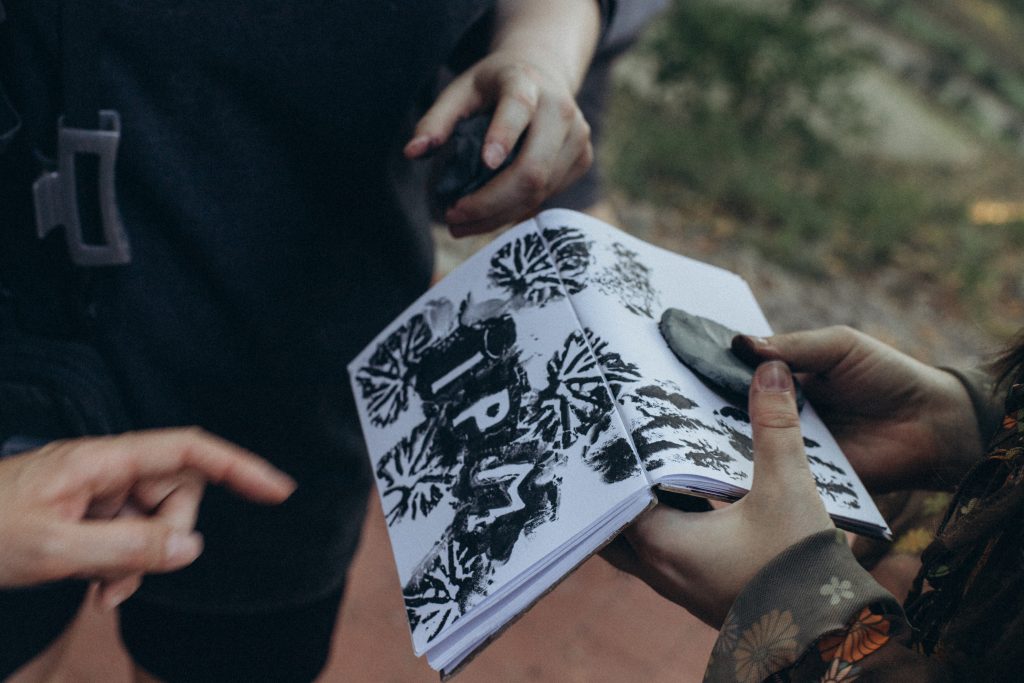
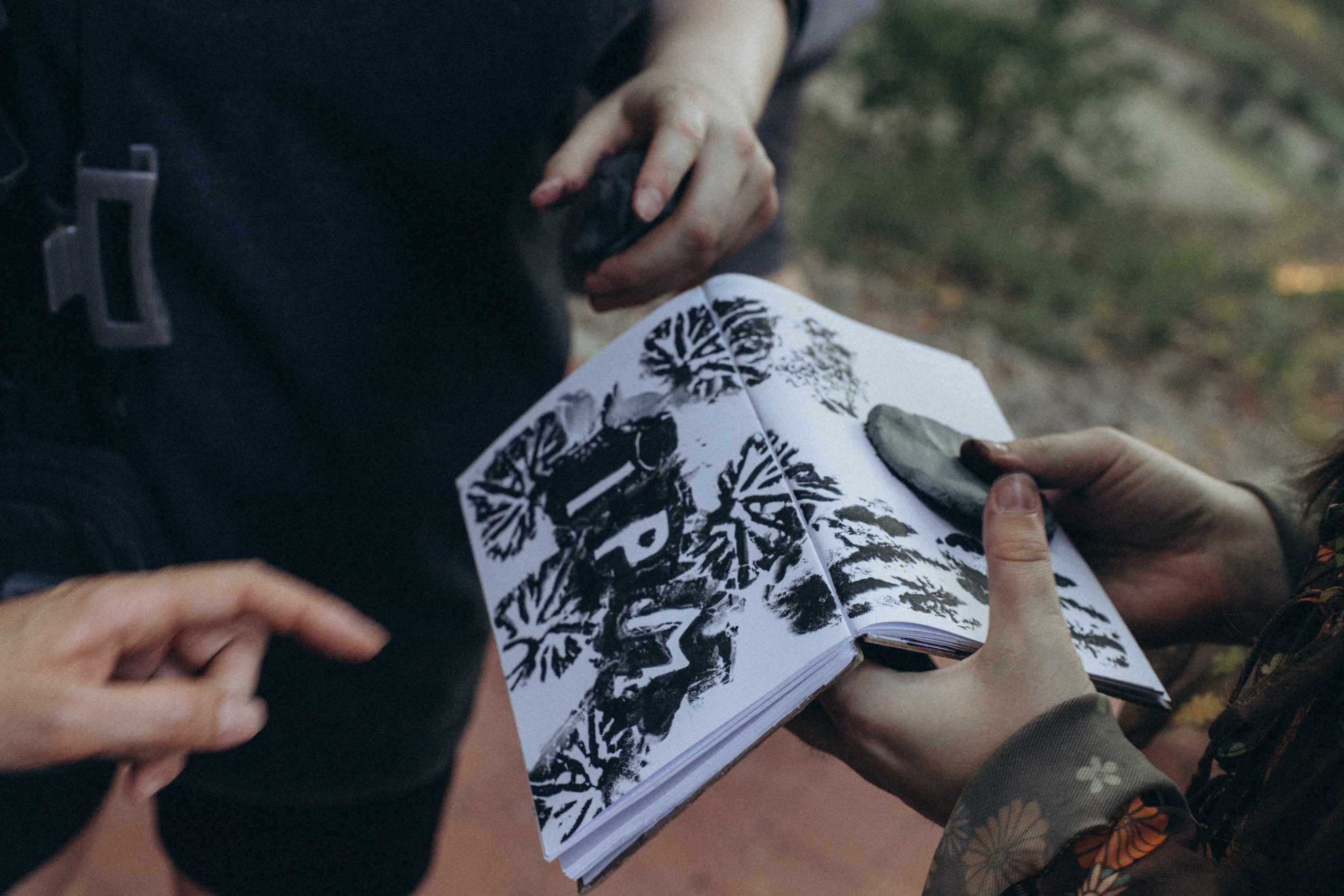
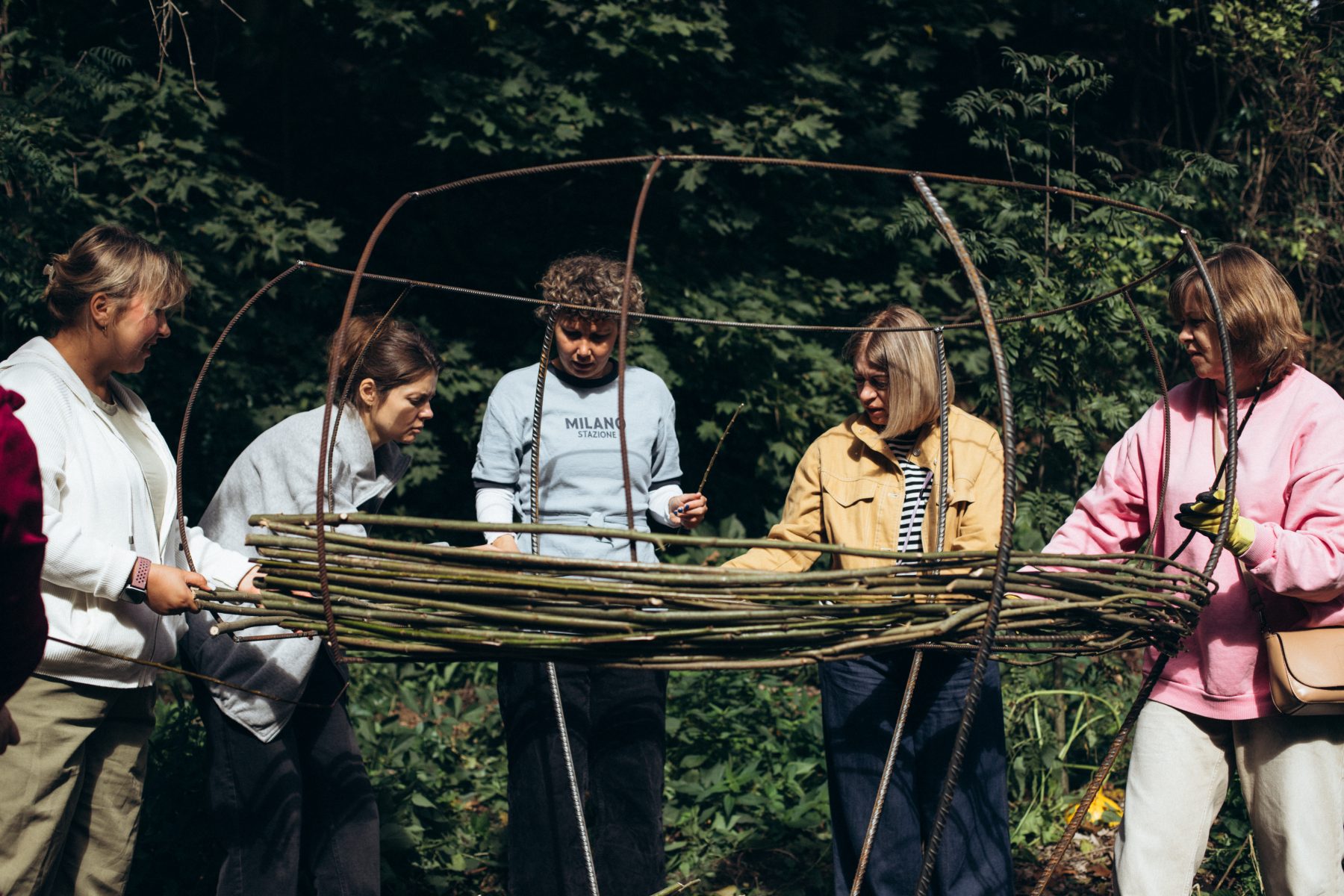
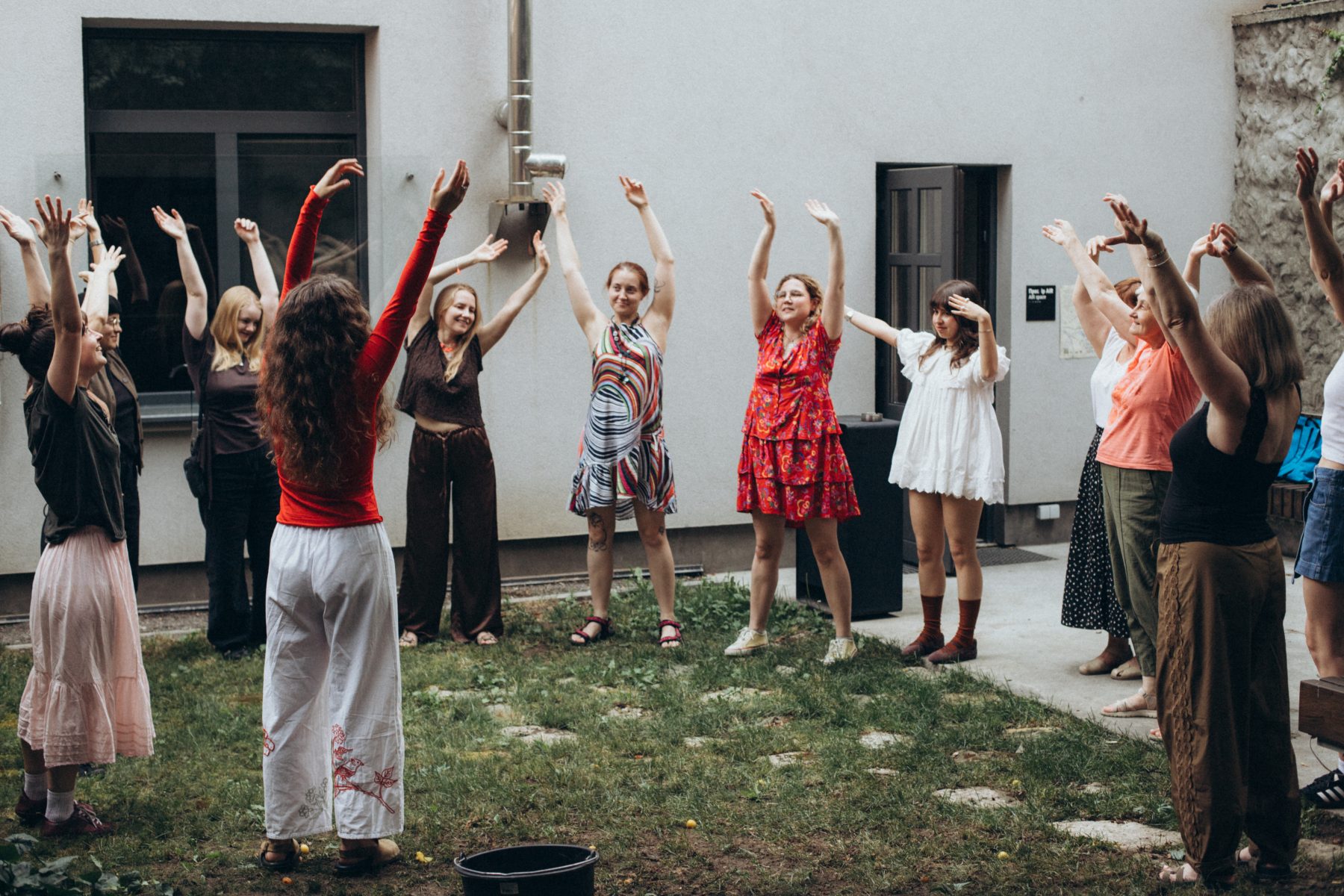
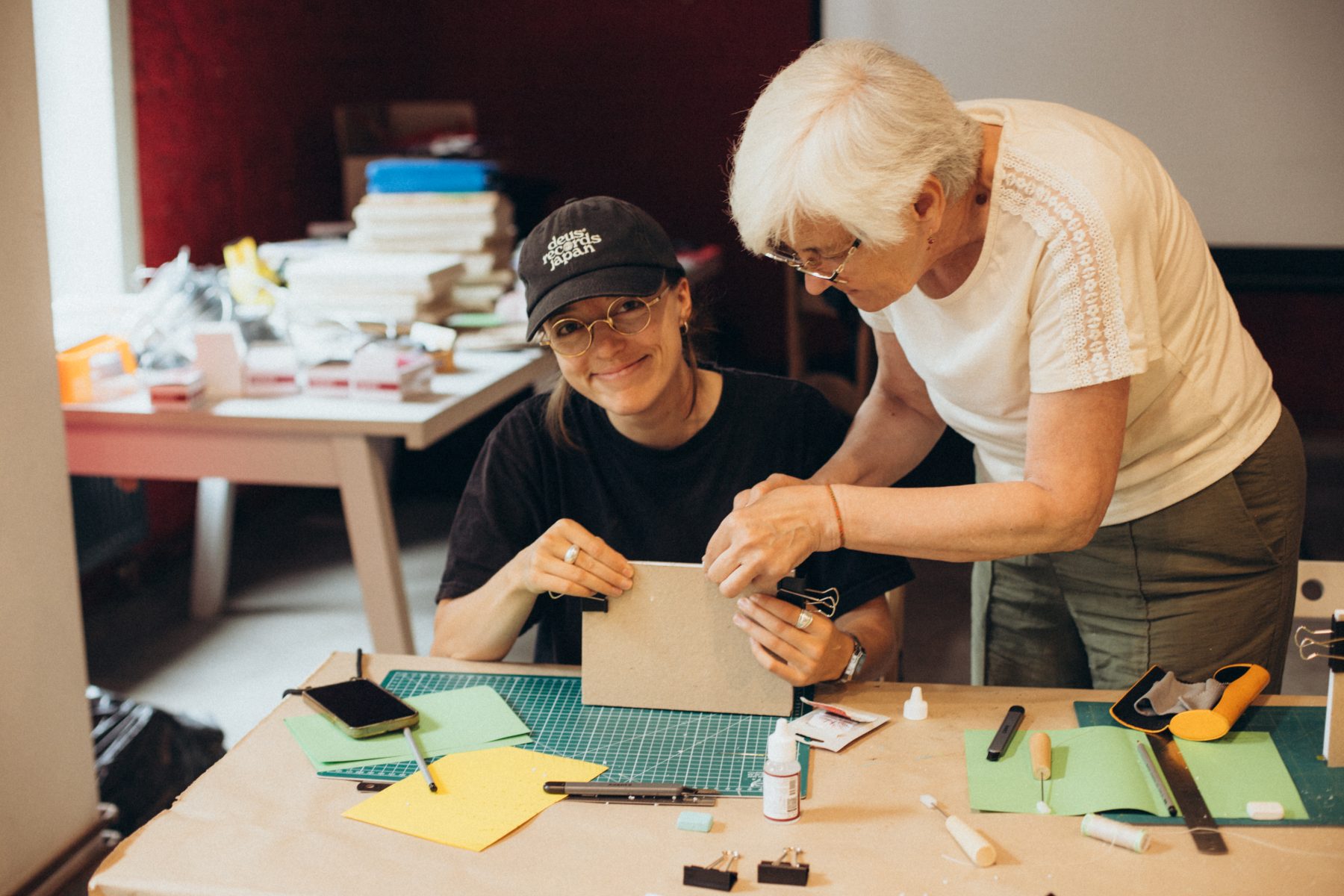
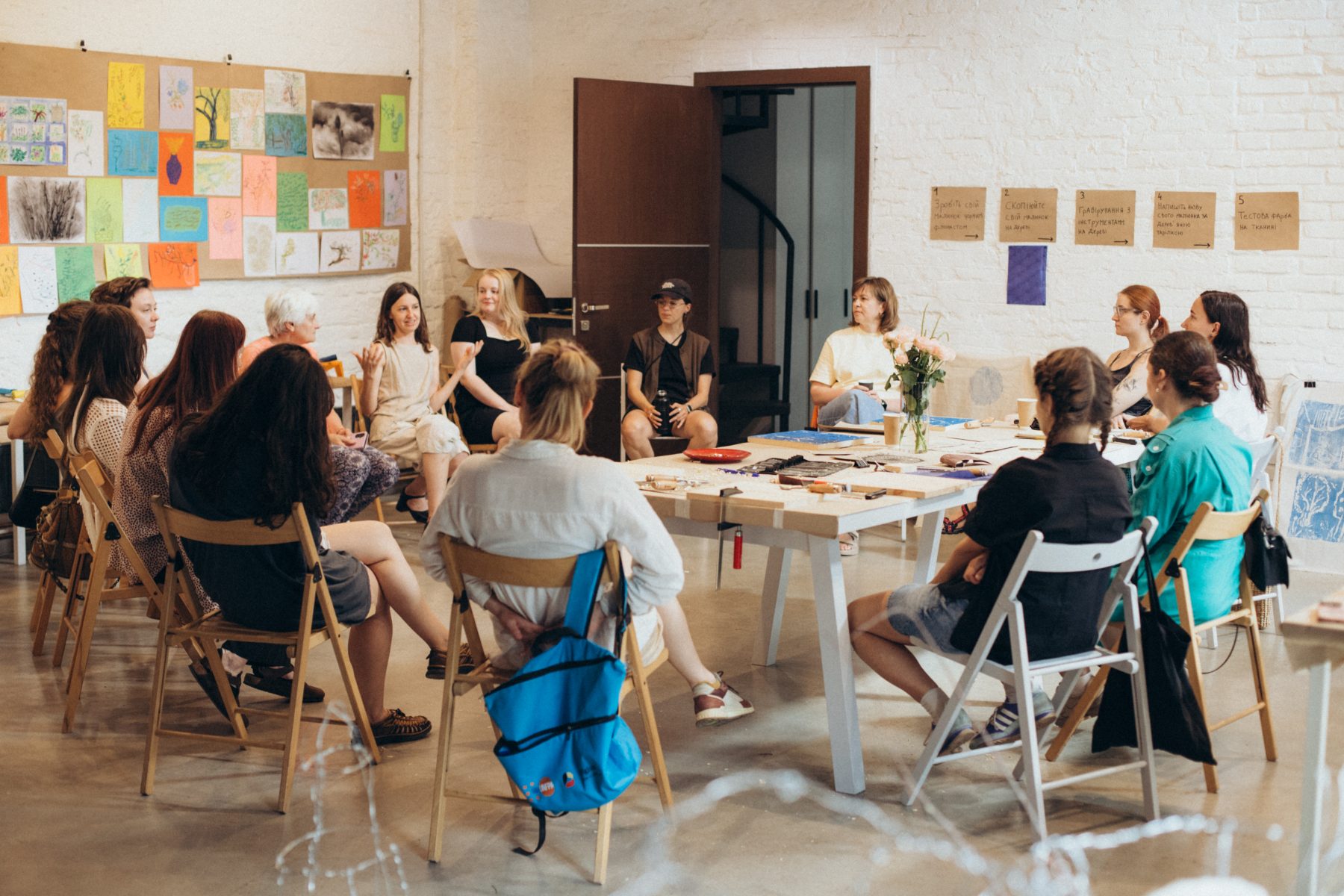
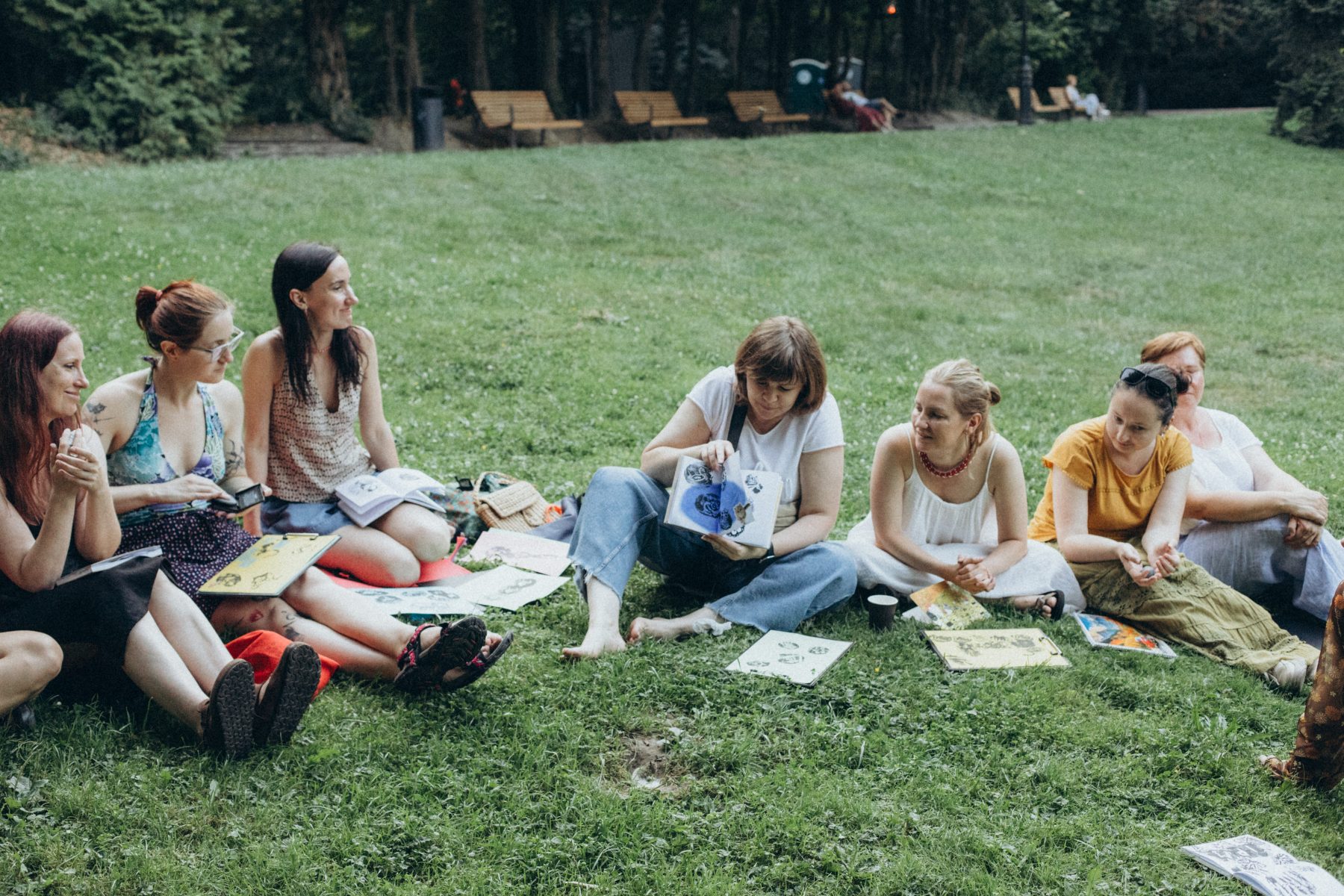
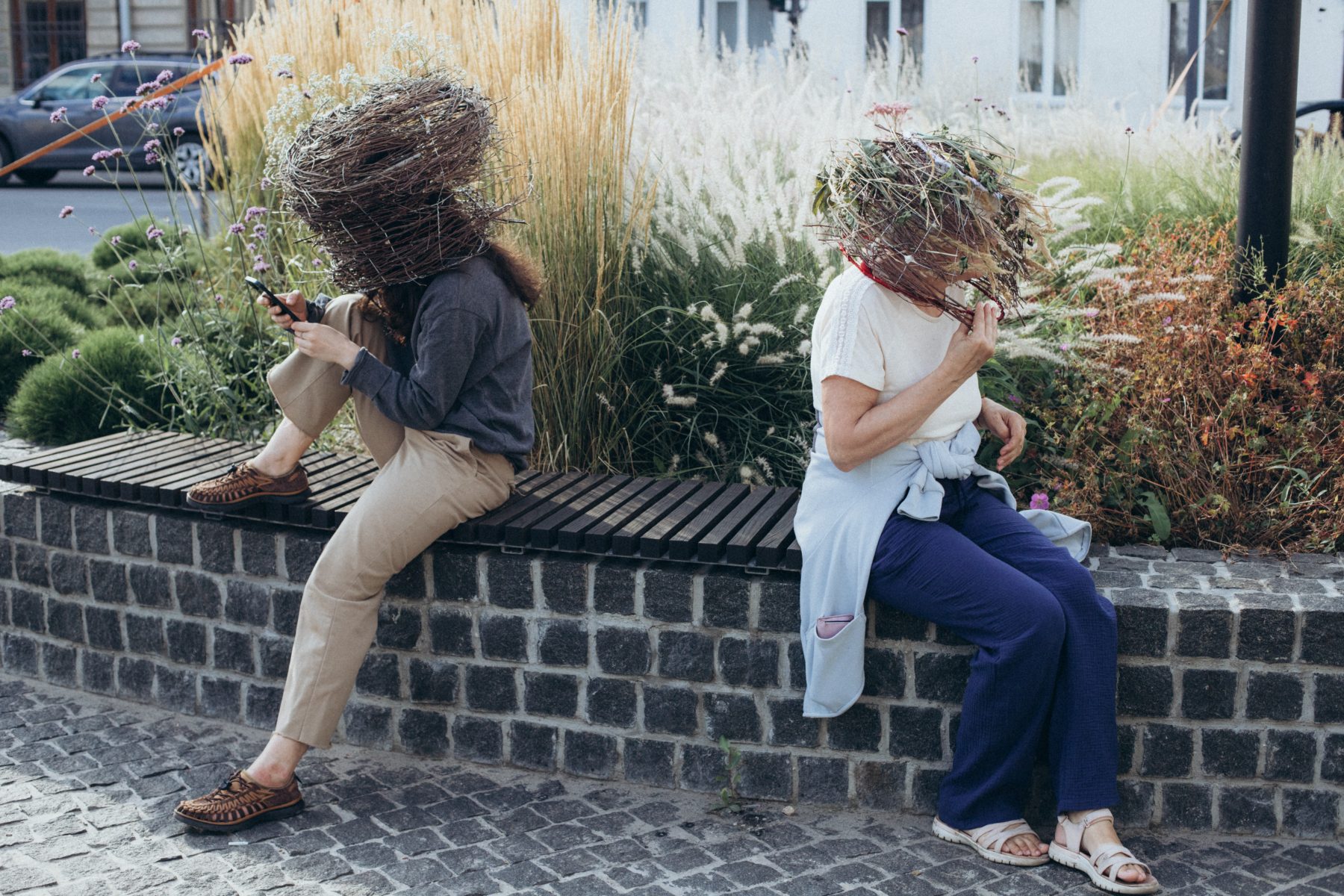
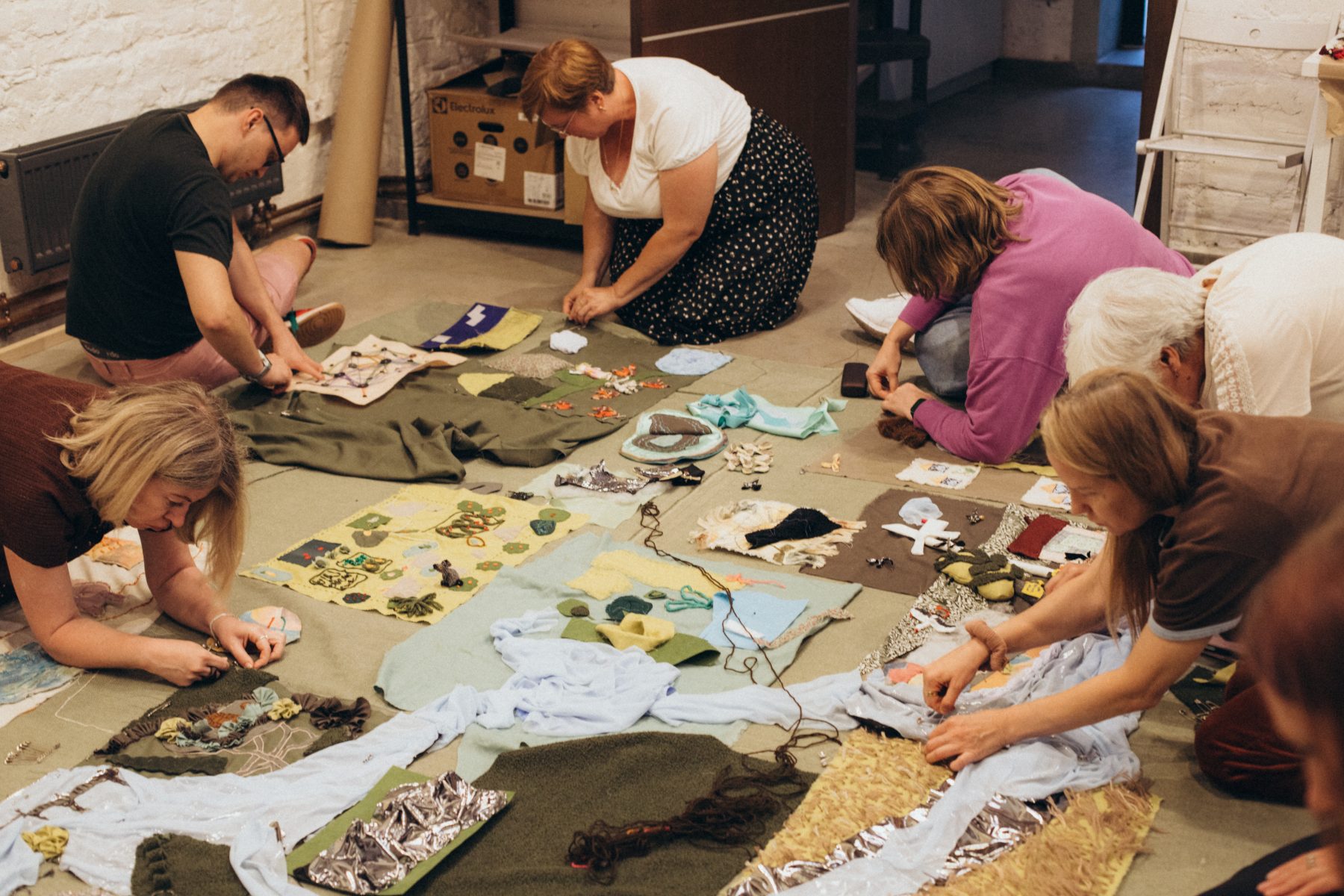
The meetings brought together a range of creative activities and collaborative formats. They began with opportunities for participants to get to know one another, share their activities, learn about the Magic Carpets project format and meet the artists. The programme continued with a series of workshops led by the artists. Lada Verbina facilitated collective drawing sessions, including an outdoor workshop, as well as the creation of handmade books that served as creative diaries for self-observation and observing nature. Bohdan Volynskyi and Valeriia Agafonova introduced participants to architecture and performative art through a mini-lecture, followed by a practical workshop involving sketching and the construction of structures from metal wire and sticks. Emma Penot led a workshop on wood engraving and printmaking, while Lada Verbina organised creative walks in the park that combined printmaking and sketching. A sewing and textile workshop was led by Lada Verbina together with Kateryna Hella, one of the participants. The programme also included a performative walk led by Bohdan Volynskyi and Valeriia Agafonova.
Alongside these activities, the process was supported by a set of participatory methods, including check-ins and check-outs, active listening, storytelling, and the introduction of communication tools such as “I-messages” and non-violent communication. The programme combined drawing workshops, creative walks in the city, outdoor drawing, working in pairs and small groups, shared cooking and eating, and practical sessions focused on wood and textiles.
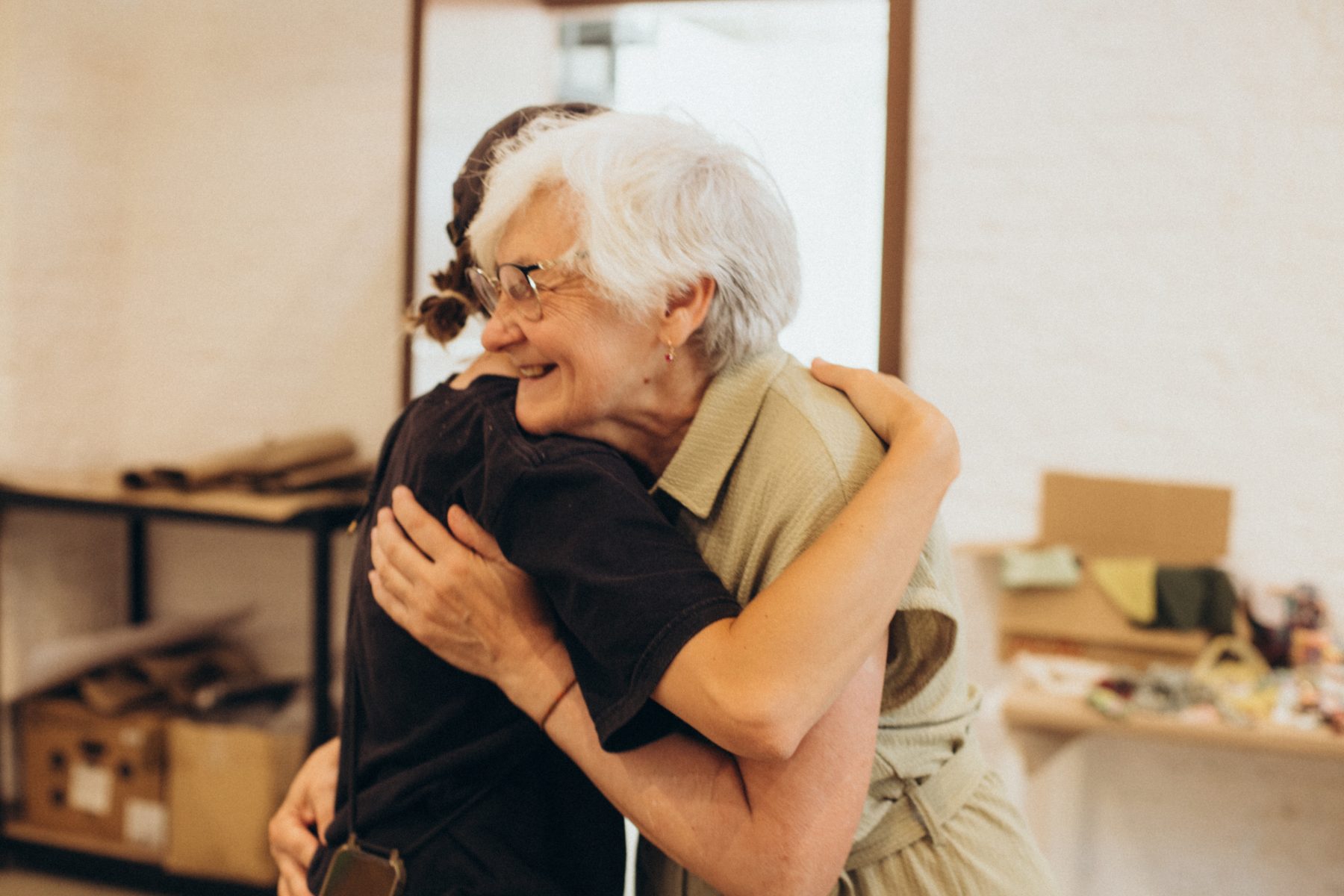
One approach particularly worth highlighting this year was the involvement of community members as co-facilitators, leading workshops alongside the artists. Participants shared their own skills and introduced the artists to their practices, creating opportunities for exchange and mutual learning. These collaborations emerged organically and had a positive impact on community engagement, while also fostering a stronger sense of agency and empowerment among participants.
Partners
NGO Rozsadnyk, which runs a community garden in Lviv and provides environmental awareness activities and opportunities to engage in therapeutic gardening.
NGO Somatic Experiencing, which provides psychological training and facilitation services for those interested in working with a trauma-aware approach. Its credo is “We help those who help”, and it works with volunteers, art therapists and social workers. Three sessions were organised for the residency team, including the artists, manager and curator.
Outcomes
Lada Verbina
“Memory of the Heart” – a textile map created together with participants of “Trails Through the Yard”. The work measures 4 × 3 metres.
Valeriia Ahafonova and Bohdan Volynskyi
“Nests” – a video documenting the participants’ performance, with a running time of 2 minutes and 54 seconds.
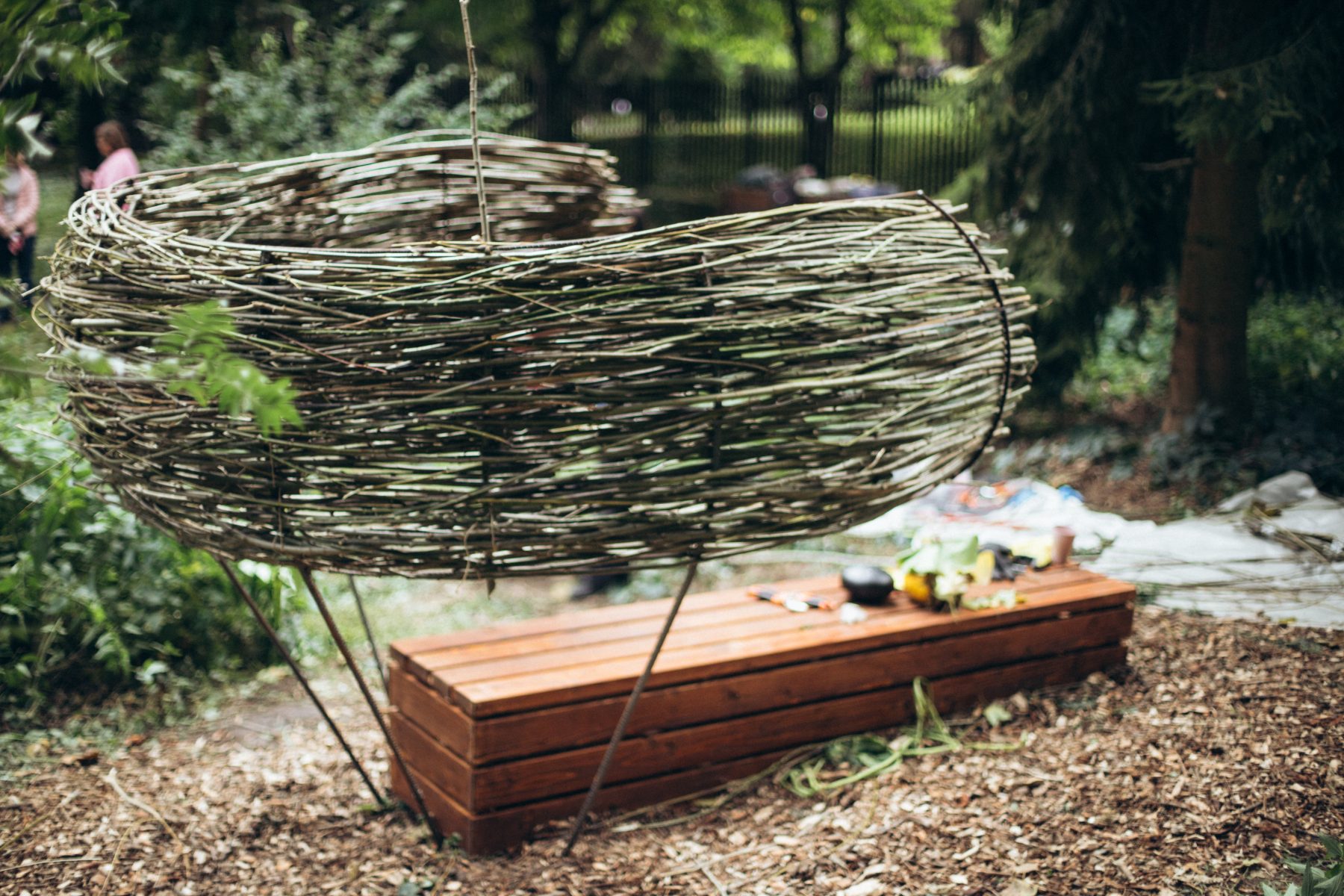
“Nest” – an interactive installation presented at Rozsadnyk, a community garden in Lviv.
Emma Penot
An installation created together with participants of the “Trails Through the Yard” programme.