Magic Carpets · Weaving the Green · CONTEXTILE 2026
COTTON PAVILION
Colectivo Palma (Catarina Braga and Miguel Ângelo Marques)
What remains invisible in what is most familiar to us?
In the Vale do Ave, a region whose textile heritage originated in the cultivation and processing of flax, cotton would come to play a decisive role in industrialisation, profoundly transforming its economic, social and cultural landscape. Yet, despite its omnipresence in fabrics, factories and collective memory, the plant from which it originates has remained virtually absent from the local agricultural landscape. We know the fibre, we recognise the fabric, but rarely do we question the living organism that precedes its industrial transformation.
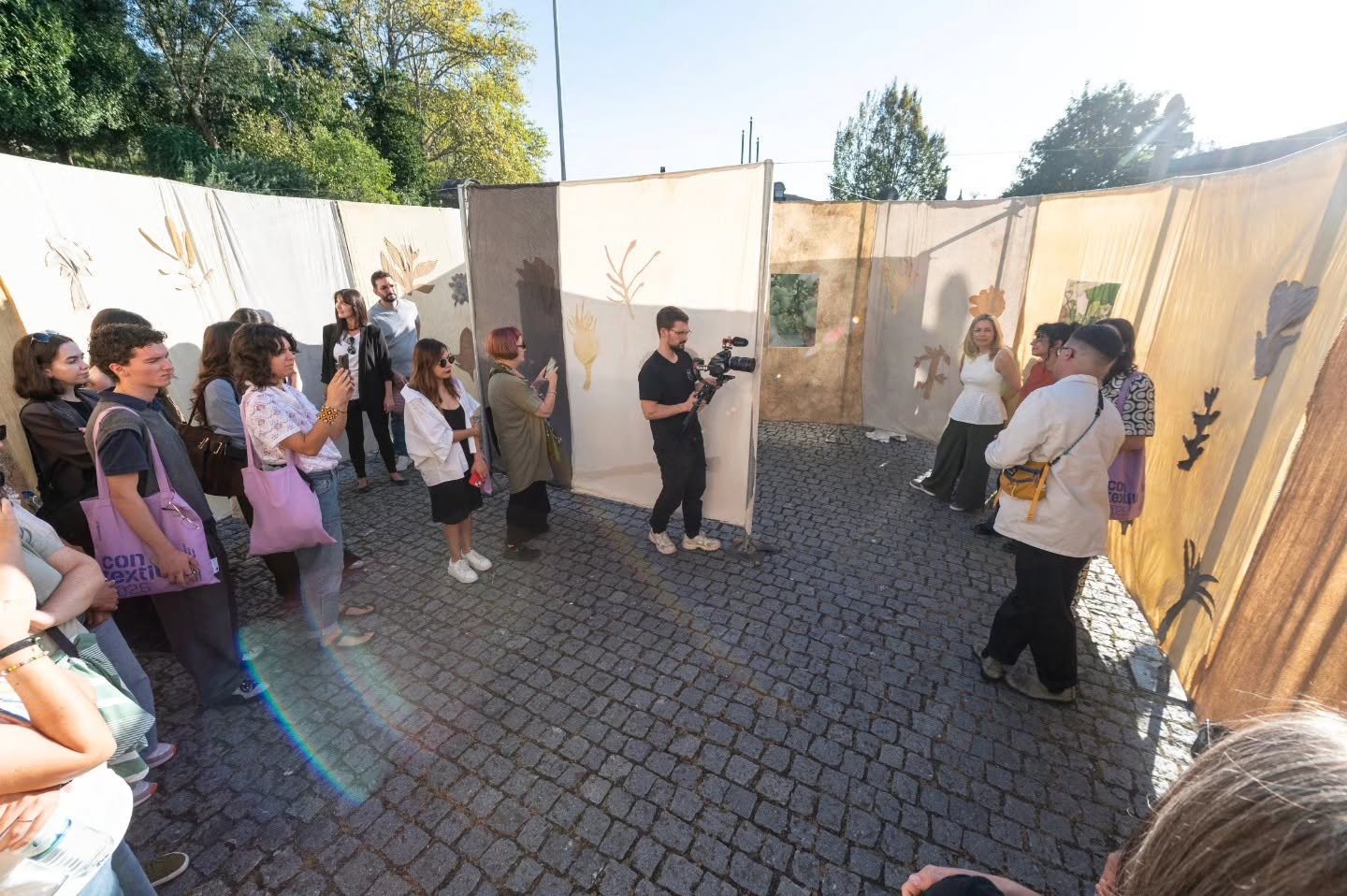
It is from this paradox that Colectivo Palma, formed by Catarina Braga and Miguel Ângelo Marques, develops Pavilhão de Algodão (Cotton Pavilion) as part of the Magic Carpets · Weaving the Green artistic residencies, integrated into CONTEXTILE 2026 under the theme Por um Fio (By a Thread), and in dialogue with Guimarães European Green Capital 2026.
The project shifts our gaze from product to origin, from transformed material to living matter, questioning how the utilitarian relationship we establish with plants shapes our perception of the natural world.

Cotton is far from an innocent material. Its history is inextricably linked to colonial expansion, the exploitation of people and resources, and the consolidation of industrial capitalism. Yet, before becoming part of these economic and political narratives, cotton is a plant. A living organism that grows, flowers and produces seeds, whose biological structure – from its spiral growth to the opening of the capsules that release its white fibres – reveals a complexity often obscured by its reduction to a raw material.
Colectivo Palma seeks to restore visibility to this living existence, proposing a sensitive engagement with the plant and its processes of transformation. Rather than denying the region’s industrial history, the project adds new layers of interpretation, acknowledging the interdependence between natural systems, human activity and cultural production.
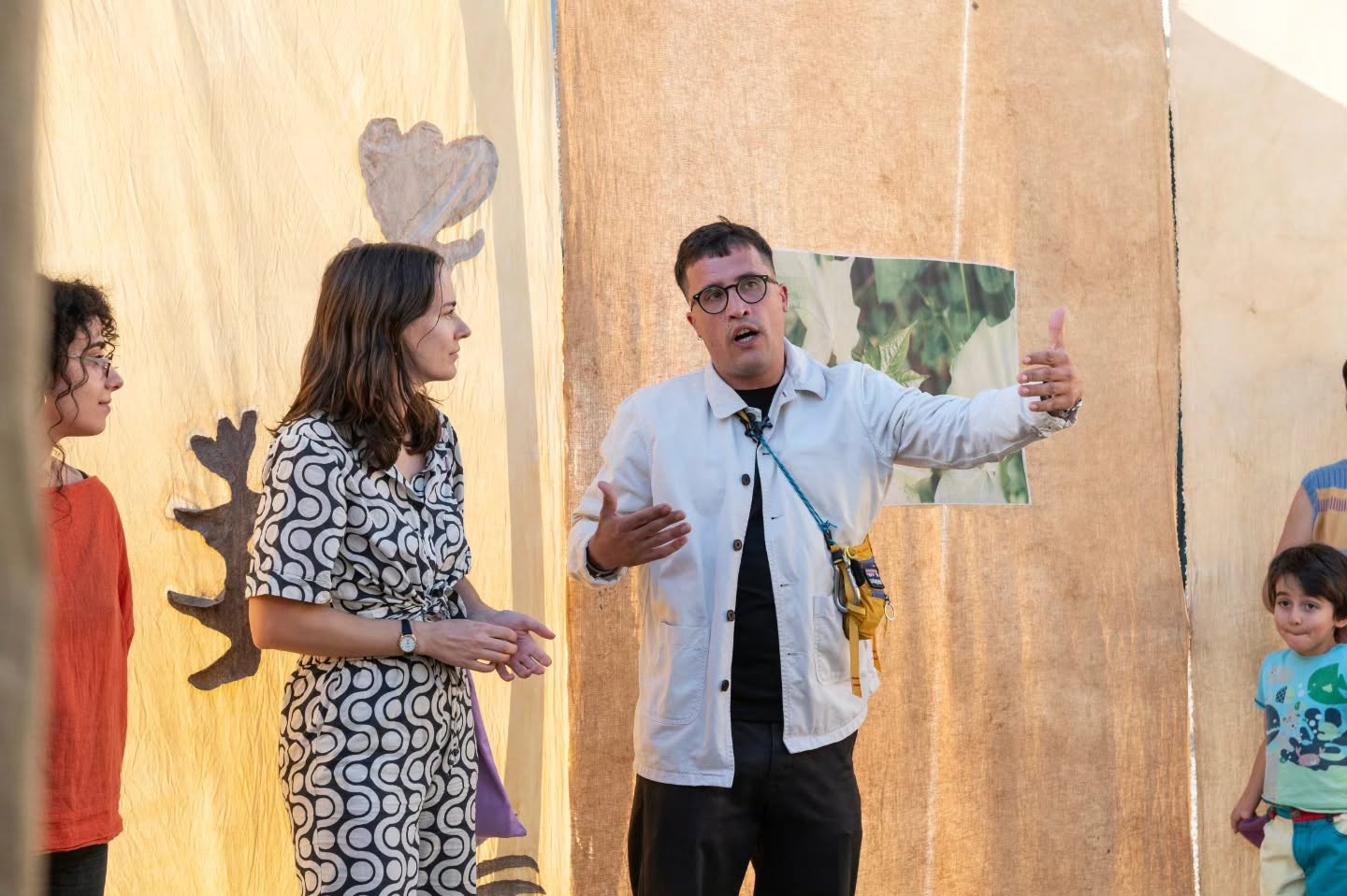
Within this investigation, colour takes on particular significance. Fabrics are dyed using plants found in the surrounding territory, including native and introduced species, some of which are invasive: English oak (Quercus robur), American pokeweed (Phytolacca americana), tree of heaven (Ailanthus altissima) and eucalyptus (Eucalyptus globulus). Each shade thus carries the presence of a plant, a place and a process of transformation, evoking different histories of land occupation and ecological adaptation.
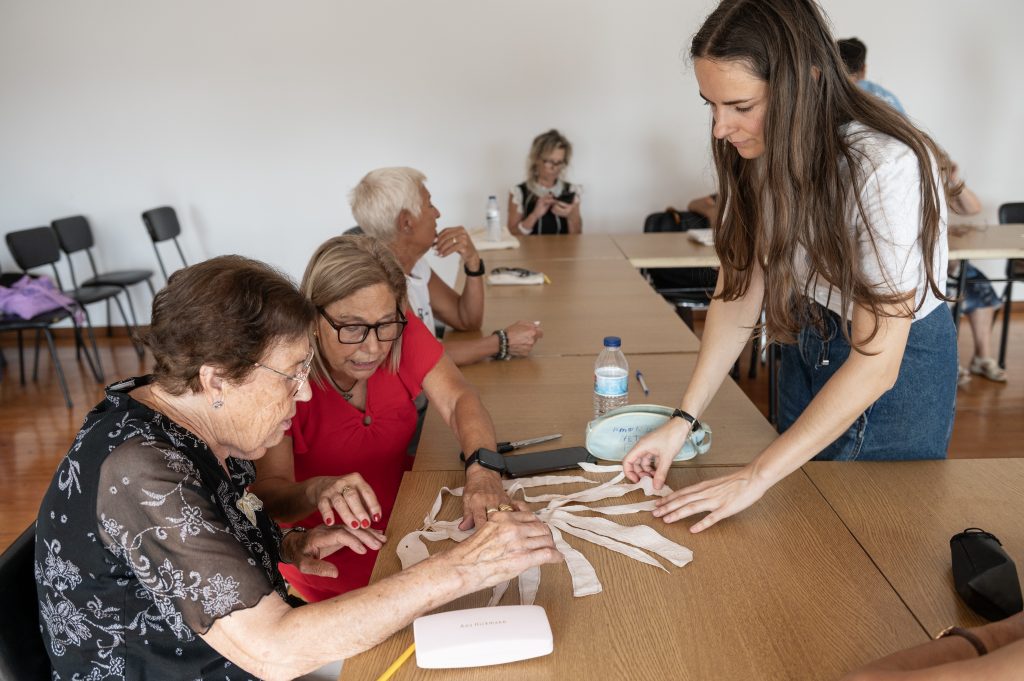
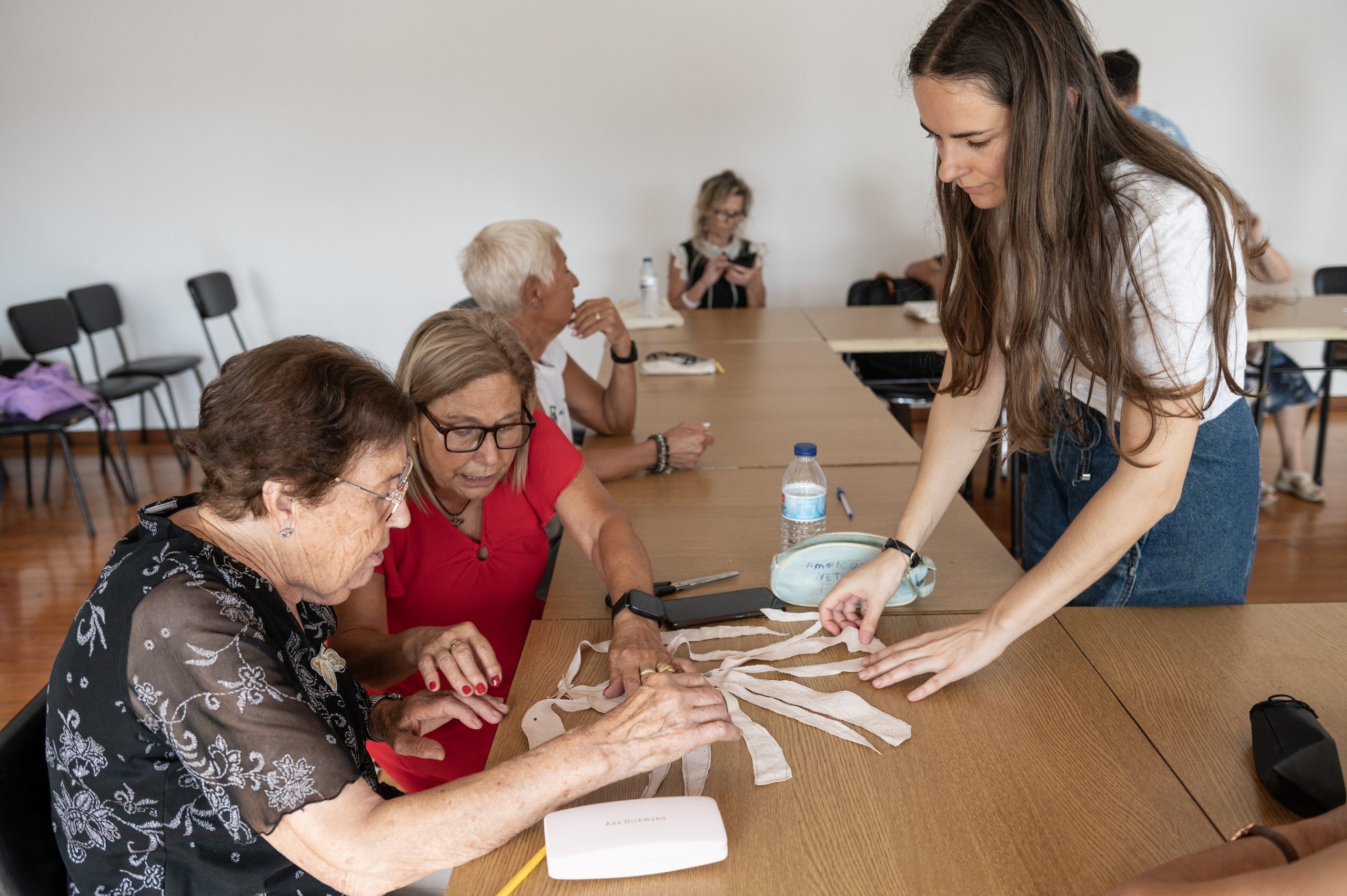
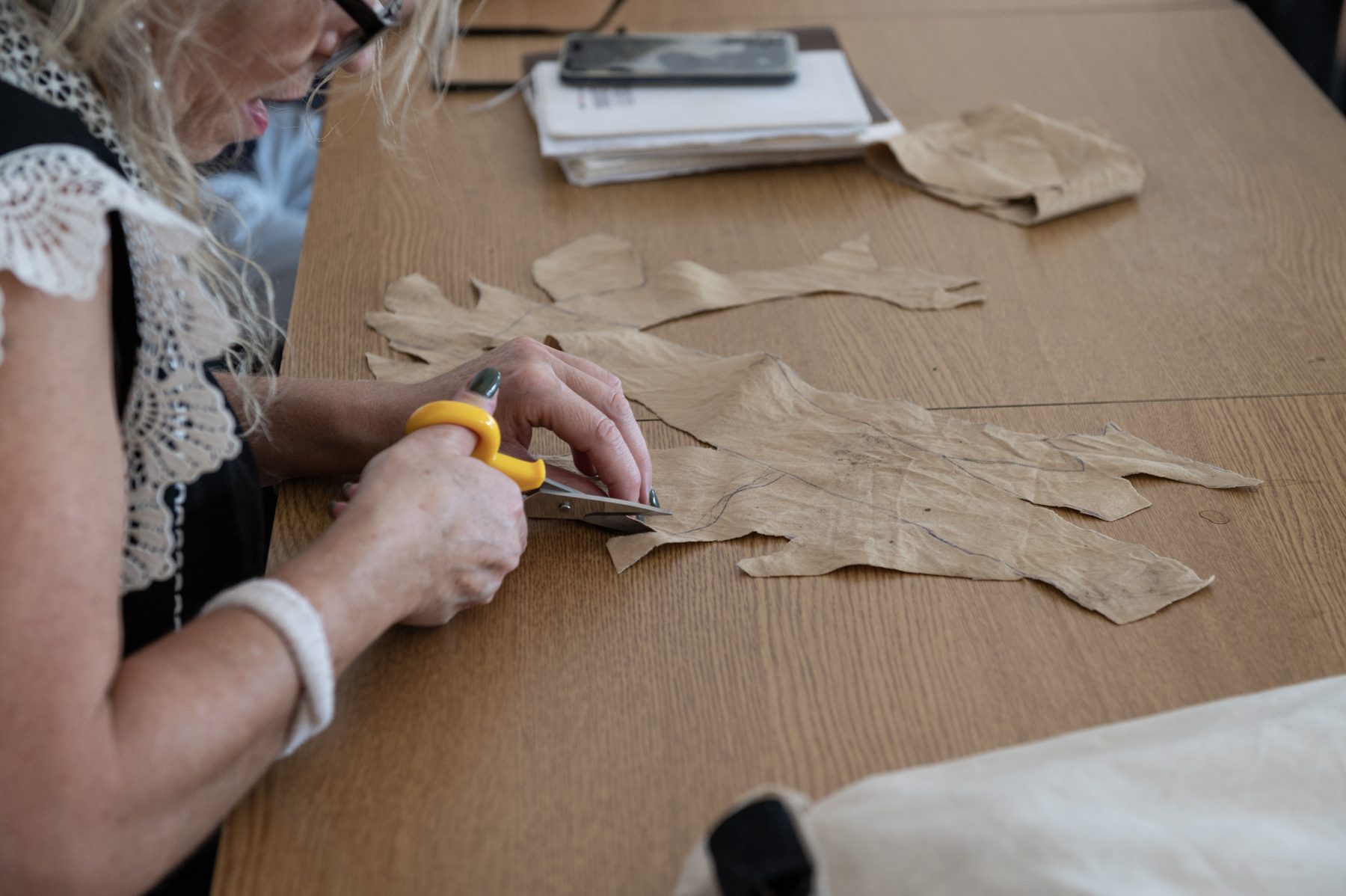
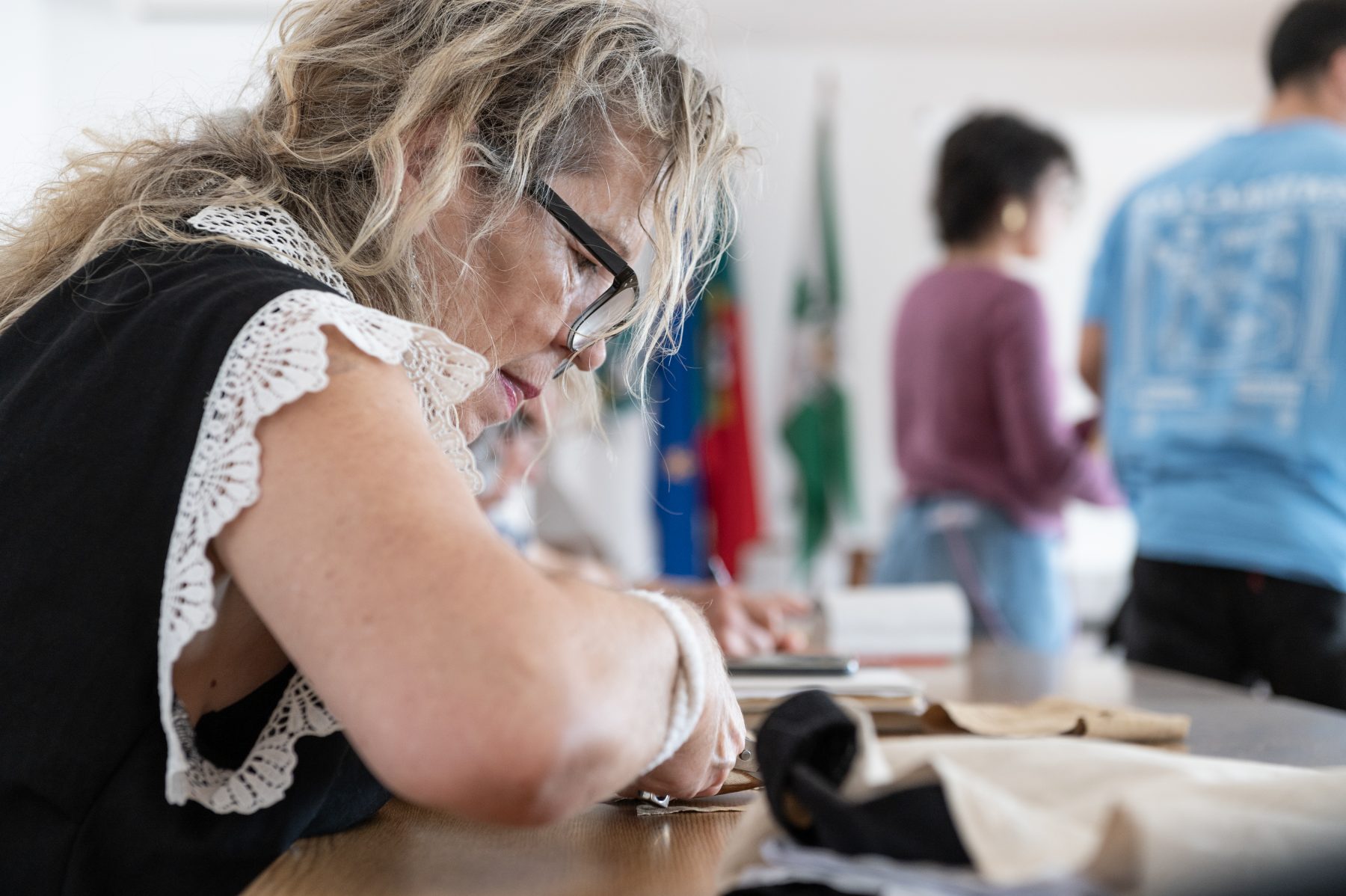
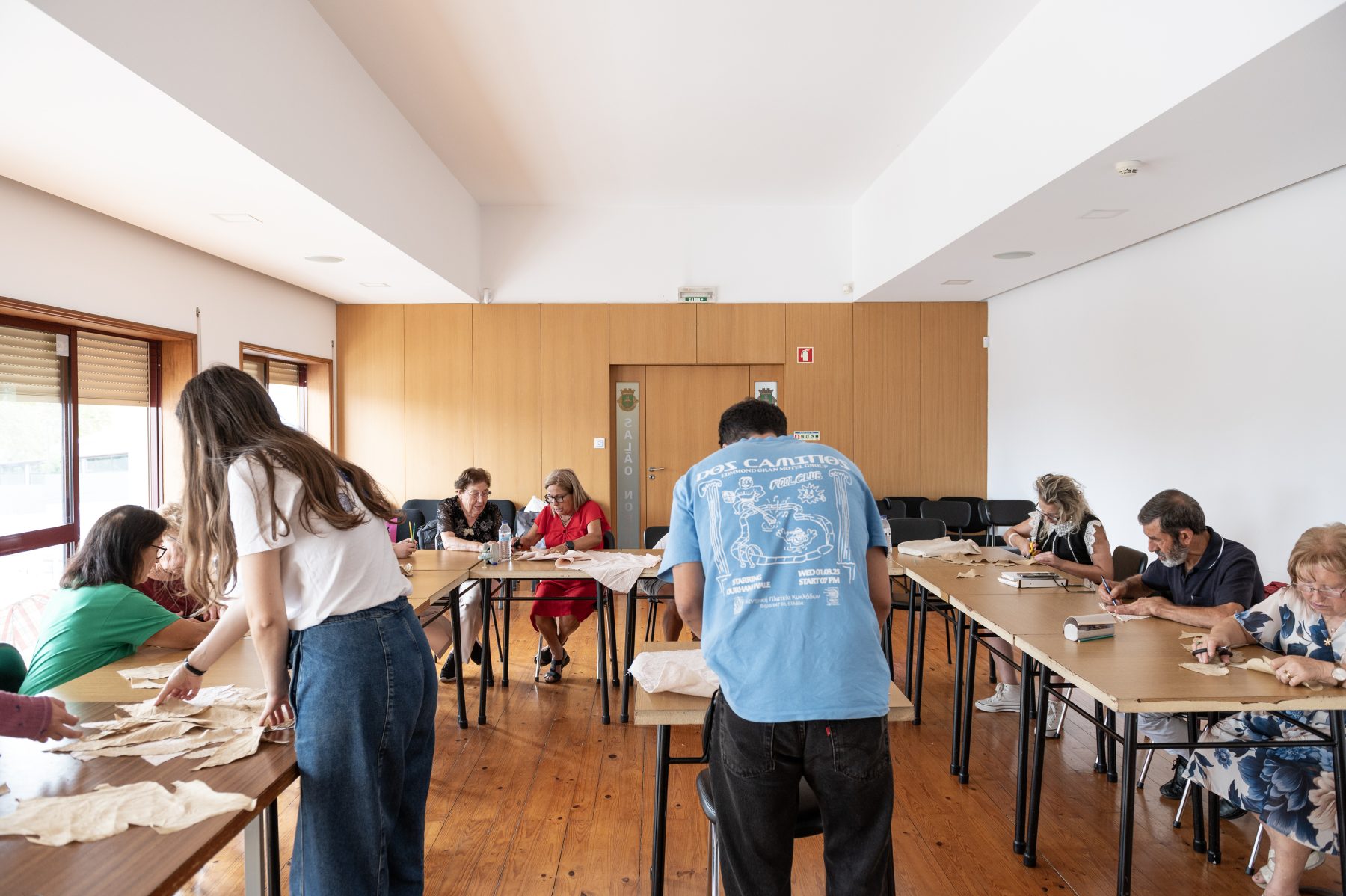
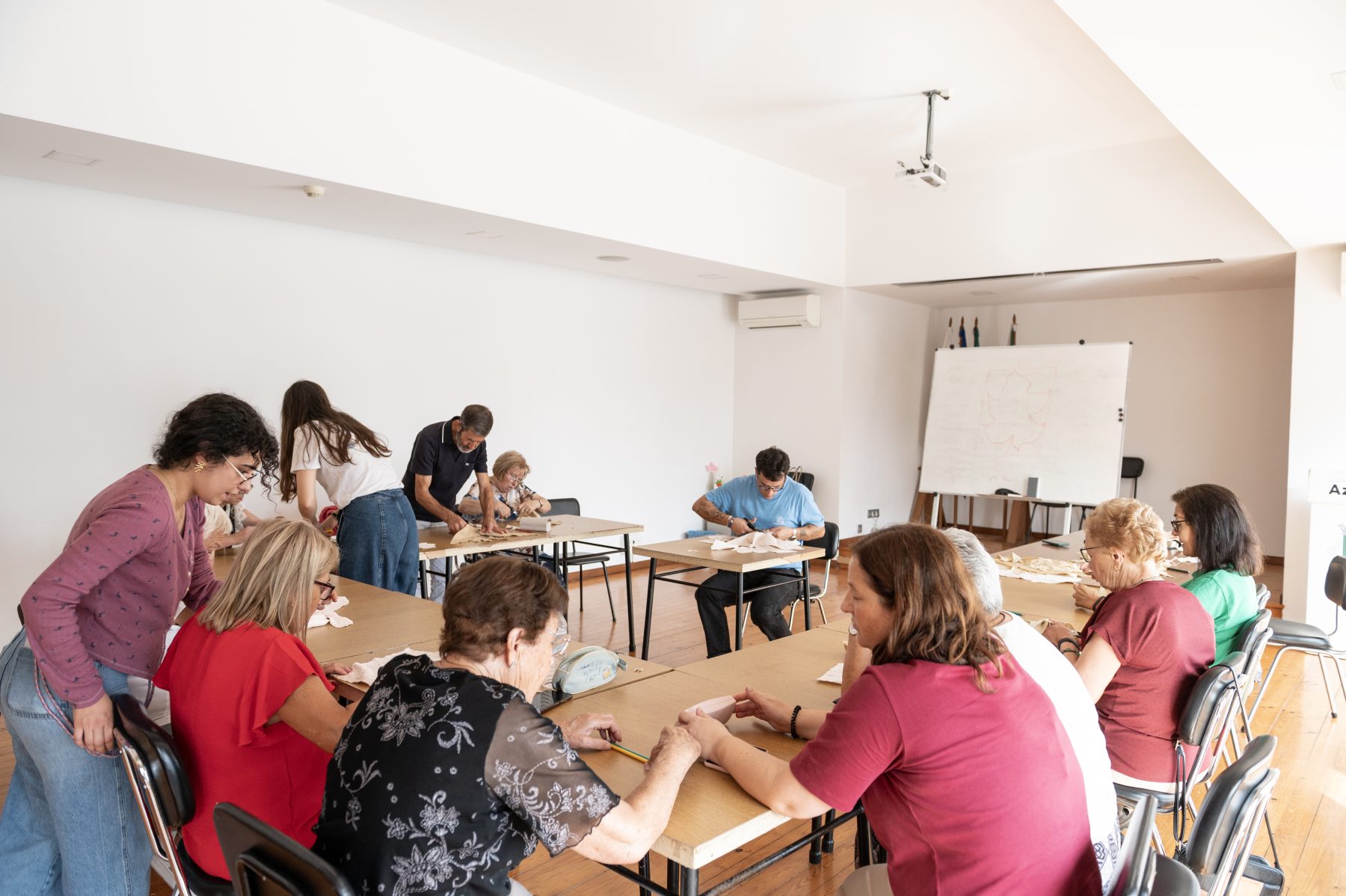
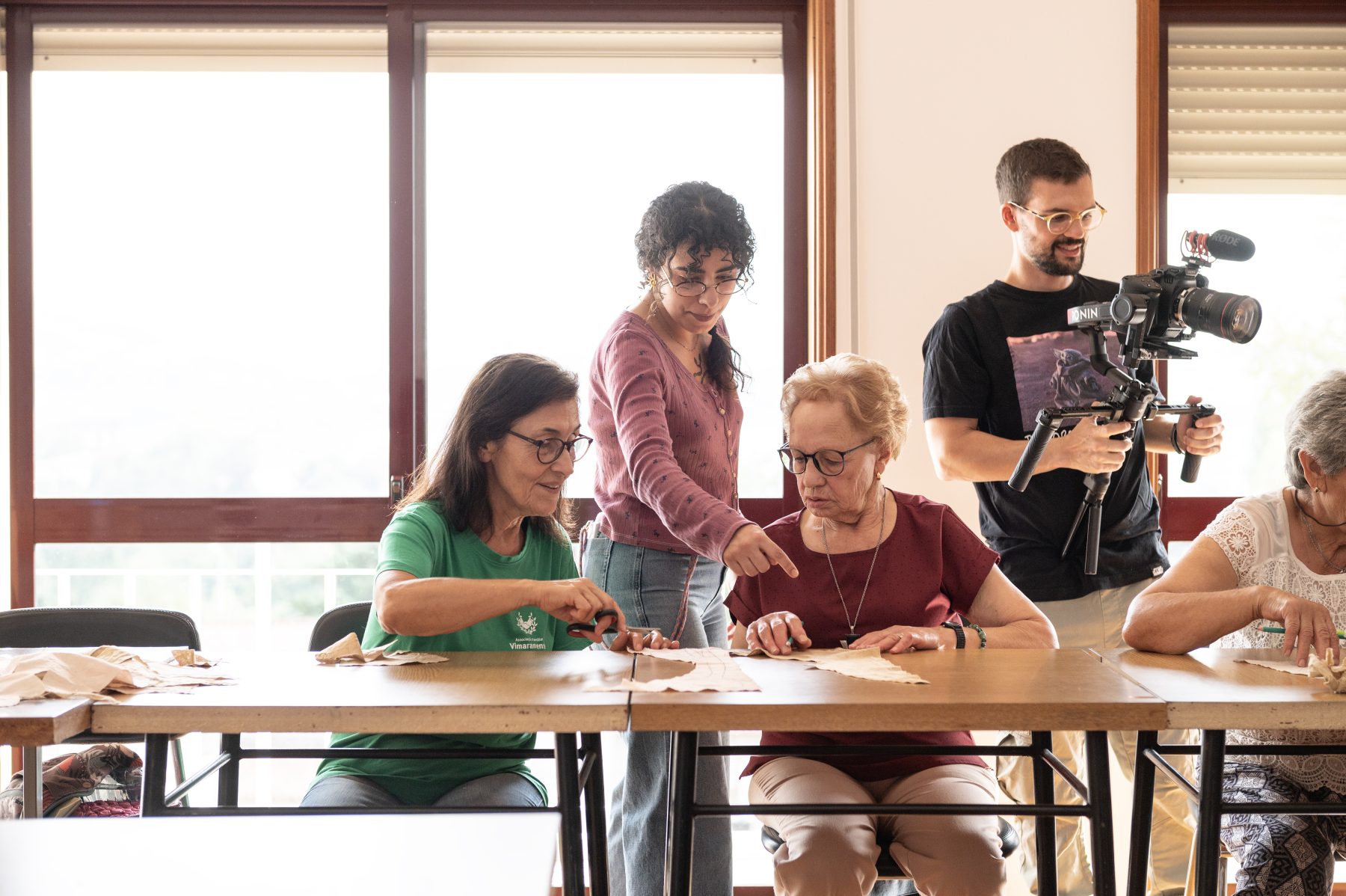
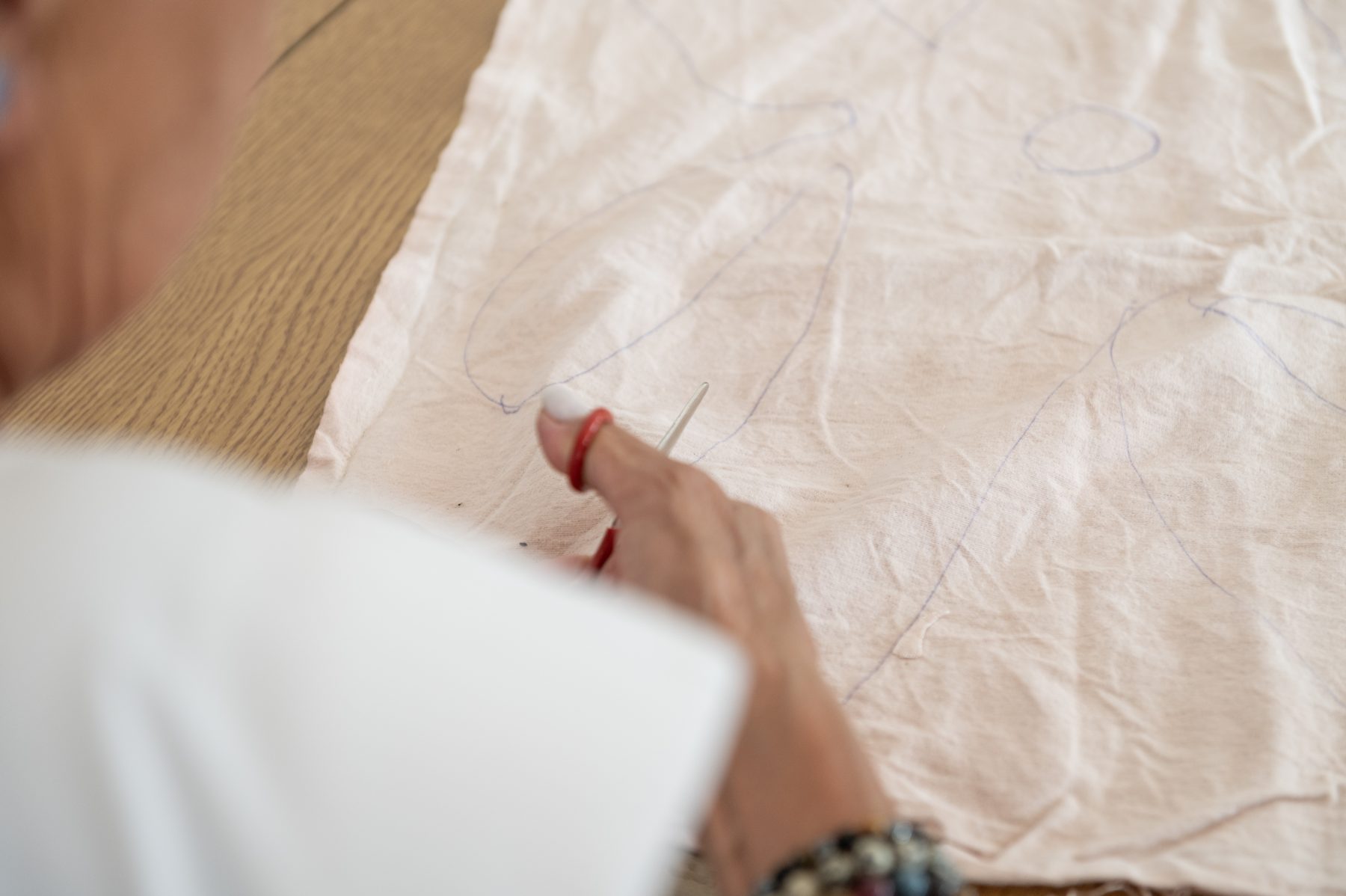
The collaborative dimension constitutes another fundamental aspect of the project. During the residency, the artists led a series of workshops with residents of Santa Casa da Misericórdia de Guimarães, a Portuguese social welfare institution providing care and support to older people and people with disabilities, and participants from Oficina das Letras, a community-based initiative in Azurém. The workshops involved participants in the collective construction of the installation.
These encounters created a space for experimentation and exchange, where making by hand became intertwined with individual and collective experiences, knowledge passed down through generations, and the memory of a region profoundly shaped by textile production. Each gesture became part of a shared process in which artistic creation emerged through participation and relationships with others.
The installation is therefore the outcome of multiple presences. Not only those of the artists, but also the contributions of the communities and the materials themselves, whose properties and transformations actively shape the work.
Cotton Pavilion becomes a space of encounter between different forms of existence and knowledge. The vegetal and the human, the natural and the industrial, the individual and the collective cease to appear as separate realities and reveal themselves as interconnected elements within a shared network of relationships.
Within the context of Weaving the Green, and against the backdrop of the fragile environmental balances evoked by the theme By a Thread, the project invites us to reconsider our place within ecosystems and to question the assumption that nature exists solely as a resource for human use.
Perhaps we need to learn once again how to observe what we believe we already know. To recognise that materials have origins, that plants inhabit their own rhythms of time, and that the objects of our everyday lives hold stories of living beings, territories and relationships that often remain unseen.
In Cotton Pavilion, weaving is also an act of connection. Between plants and people, between memory and transformation, between what we inherit and what we may yet create together.
Cláudia Melo
Curator
Magic Carpets Artistic Residencies · Weaving the Green
Curated by Cláudia Melo and Ana Leandro
Guimarães, 2026