A Concert for Deferred Dreams
The concert began with an introduction by choreographer and artist Laima Jaunzema, who shared a text she had written for the occasion. Her reflections on the meaning of a concert, collaboration, access and the possibility of imagining different futures offered an entry point into the performance and the creative process behind it.
Hello, and thank you for being here! My name is Laima Jaunzema, and I want to begin with the word “concert”.
The word concert comes from the Latin concertare. Its original meaning had nothing to do with music or harmony. It described the ability to argue, to fight, to measure oneself against another.
Later, this meaning turned almost completely upside down – which I think is a profound shift, because in order to communicate deeply, we also need to know how to deal with conflict. By the end of the 16th century, concertare had come to mean coordinating, discussing, reaching agreement and doing something together. From there came concerto, and eventually the word arrived at what we understand as a concert today: different people doing something together to create something for others to experience.
Our possibilities are often shaped by what we have access to – what we know, where we are expected to belong and what we are allowed to do. What we have access to also shapes the horizons of what we are able to imagine as possible. A lack of access does not only limit who has the opportunity to fulfil their dreams – it also limits the range of what we can imagine as desirable or possible, for ourselves and for others. And perhaps that is why it is worth asking not only how to fulfil a dream, but also which dreams we no longer want to accept as the only possible fulfilment – or as something that should belong only to ourselves.
We worked together throughout August, three times a week, and began with a question:
If you had a space – a place where you could do anything creative you wanted – what would you do? What would happen in that space?
From this question, through detours and different experiments, the presentation you are about to experience took shape.
What you are about to experience is the result of an incredible contribution from four participants – their ideas, energy, time and courage; their willingness to overcome themselves and their fears; and their openness to meeting and sharing.
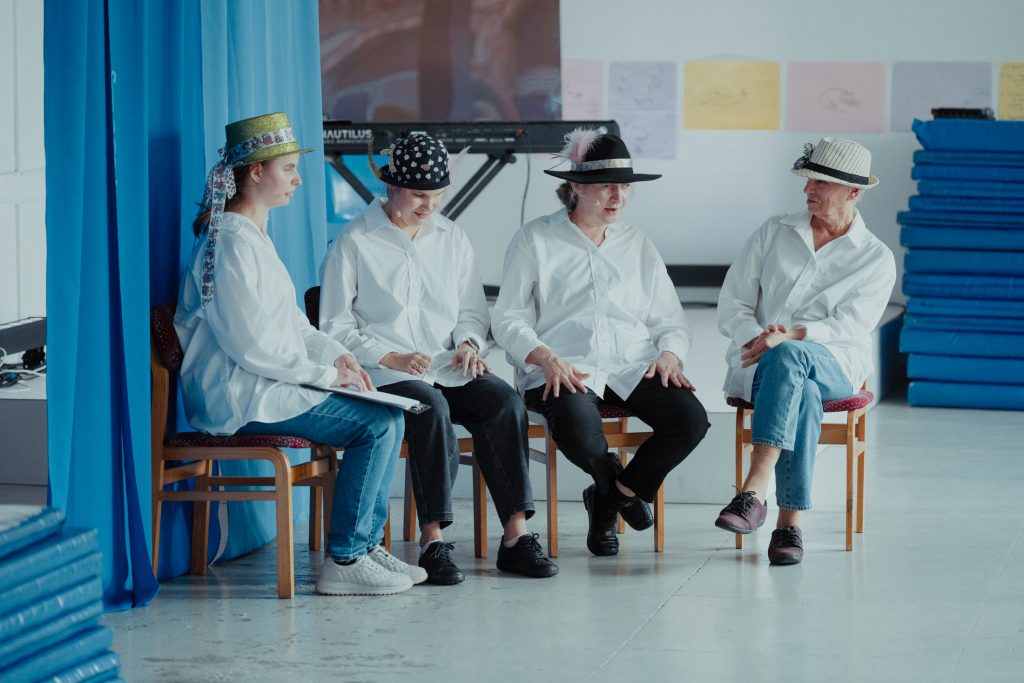
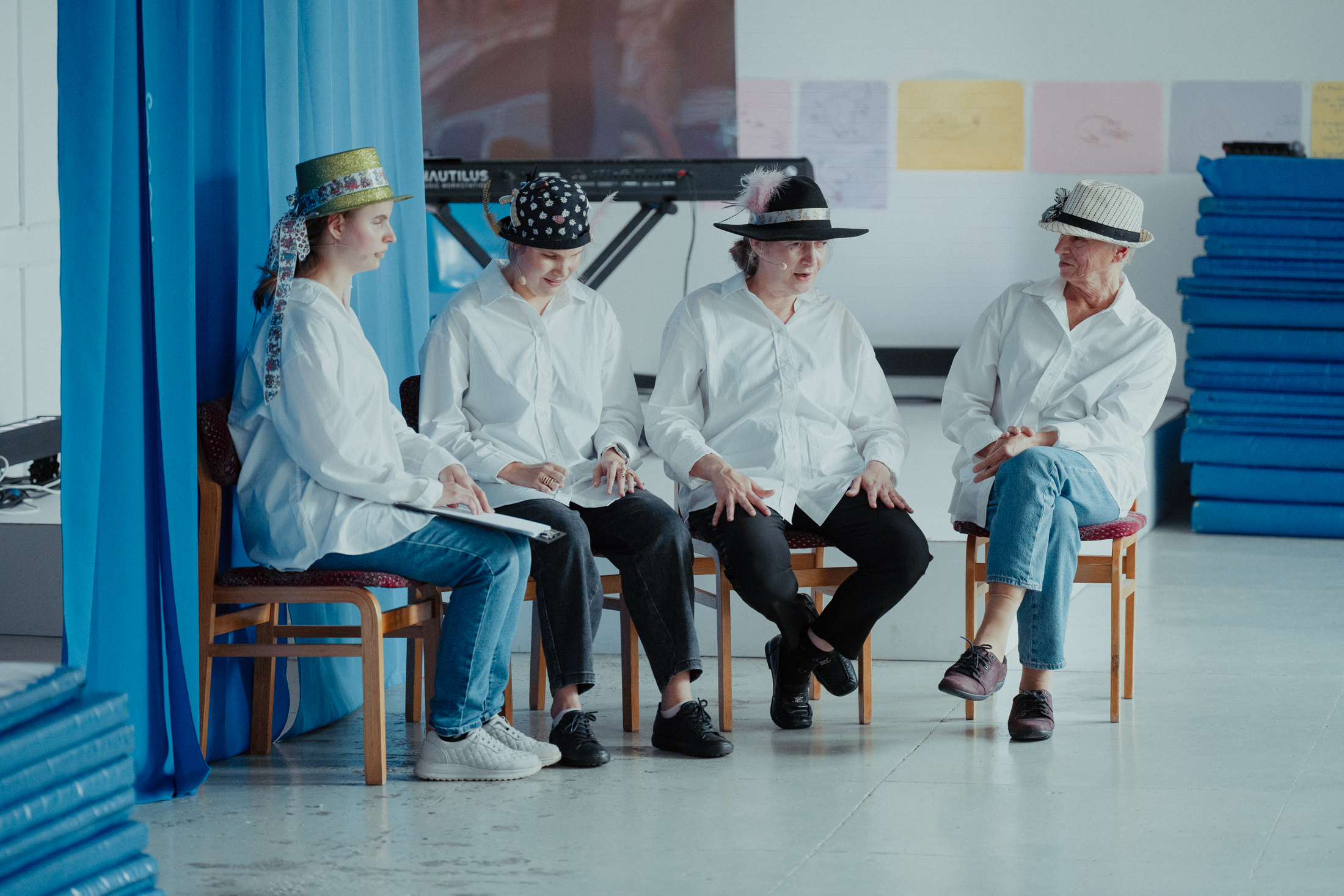
Today, performing are Zane Juniore, Agnese, Jeļena and Zane Seniore / Zane Vecmāmiņa.
In this process, I worked as an artist and facilitator – like a sponge, collecting and absorbing information, while offering frameworks, rules of the game and situations in which ideas could begin to move.
Perhaps the time at Strazdumuiža does not entirely fit here, because at Strazdumuiža there was always another meeting to look forward to. After today, there will not be another meeting of this kind. But however they choose to take the risk now, they have shown up.
From the bottom of my heart, thank you to all four of you for always showing up!
And then, like the deep time held in the floorboards of Strazdumuiža, the red chairs, the trees fallen in the storm – four women talking,
where is the light backstage, see you tomorrow…
And the wind, the lake, towards Jugla.
And poetry, poetry, poetry.
And steps, steps, steps.
And scratches, breaths and sighs.
Original sound material by Grēta Garjāne.
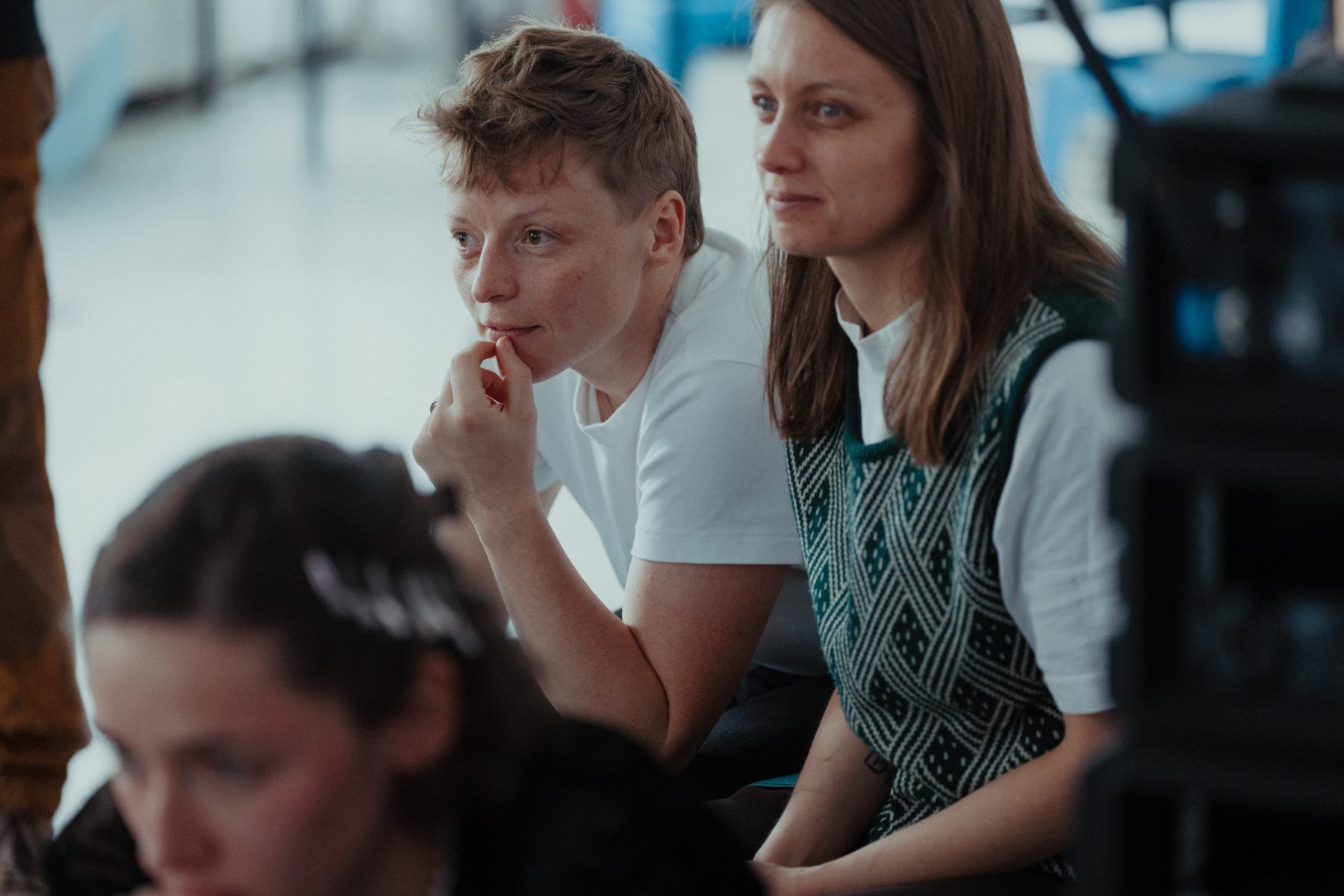
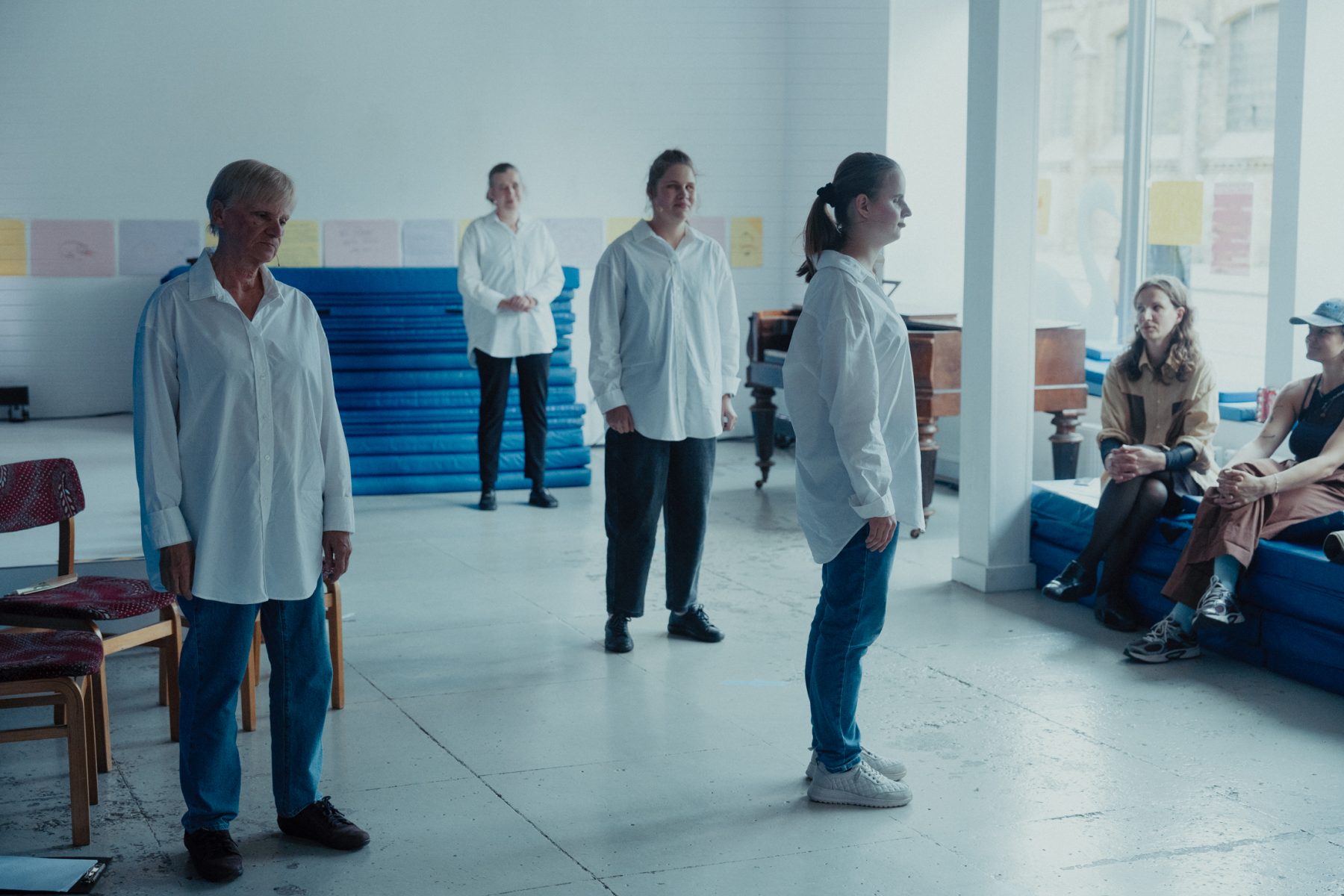
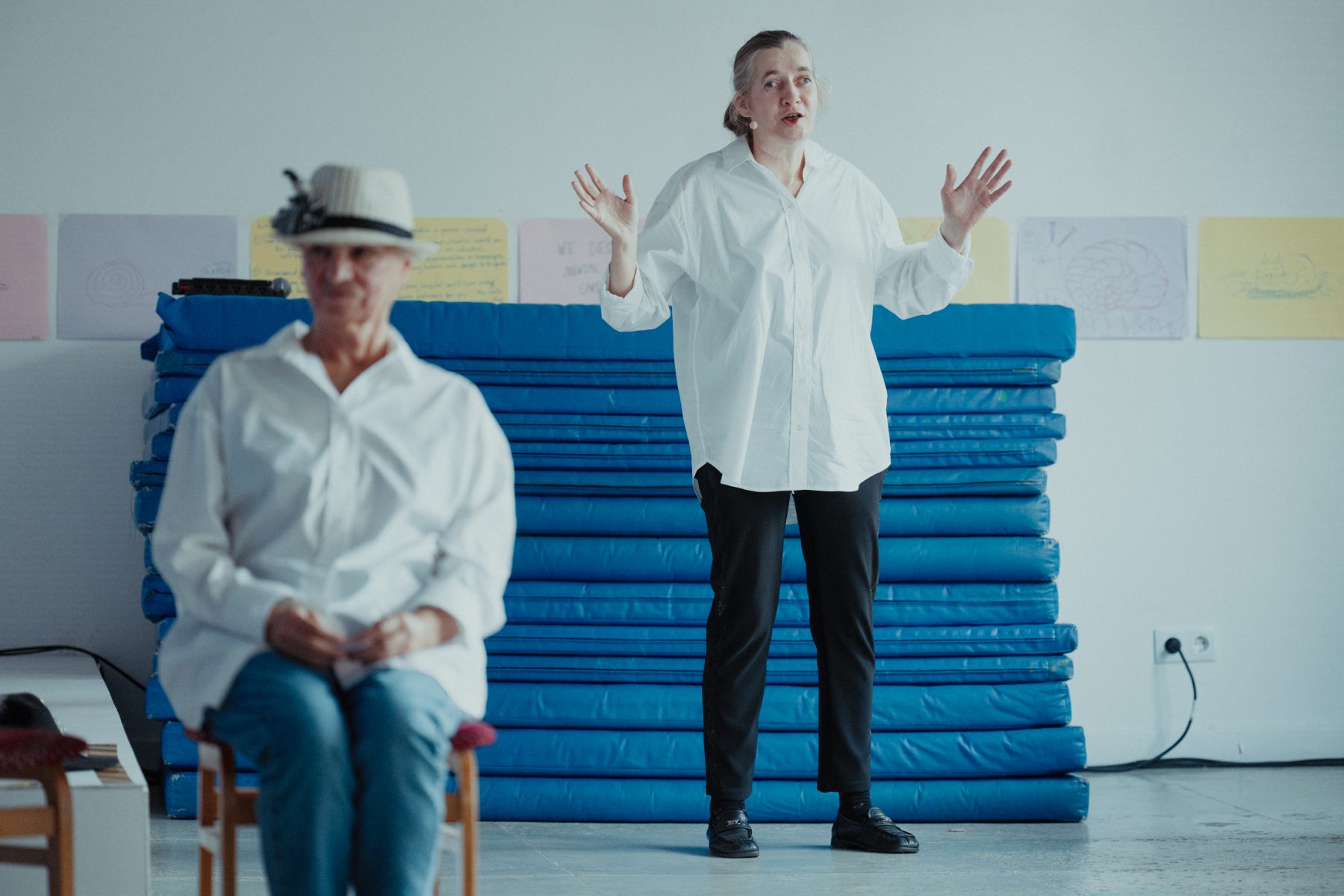
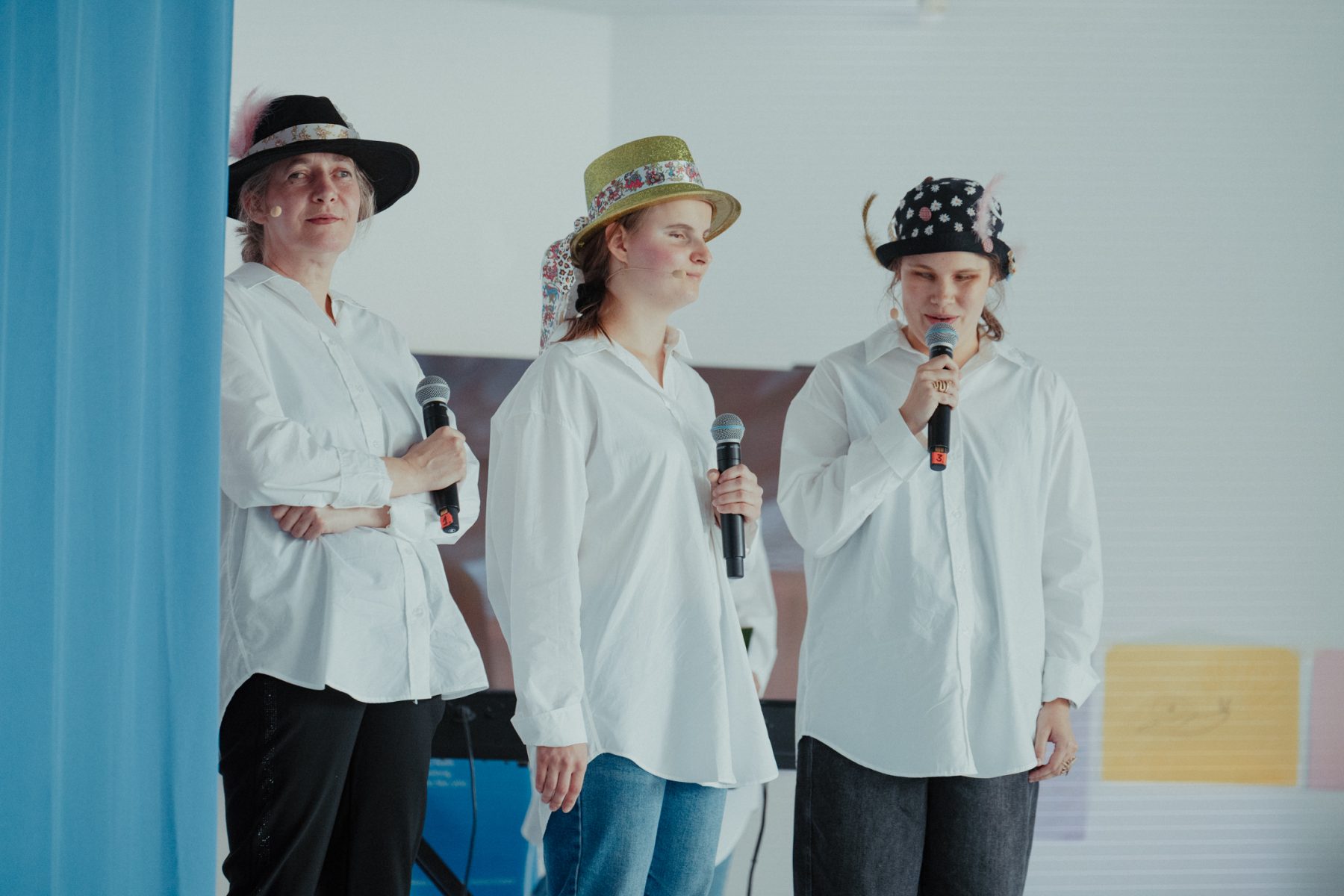
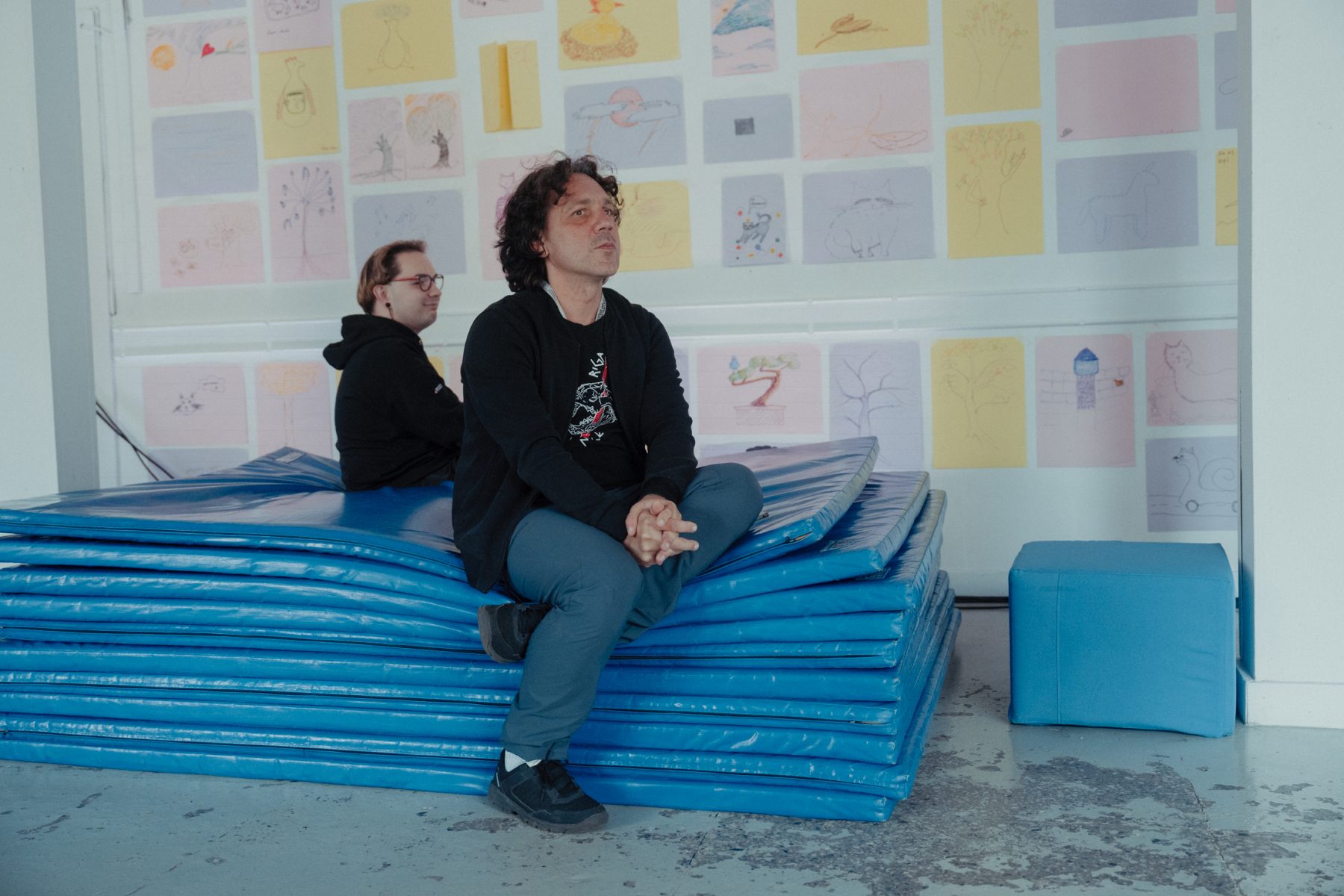
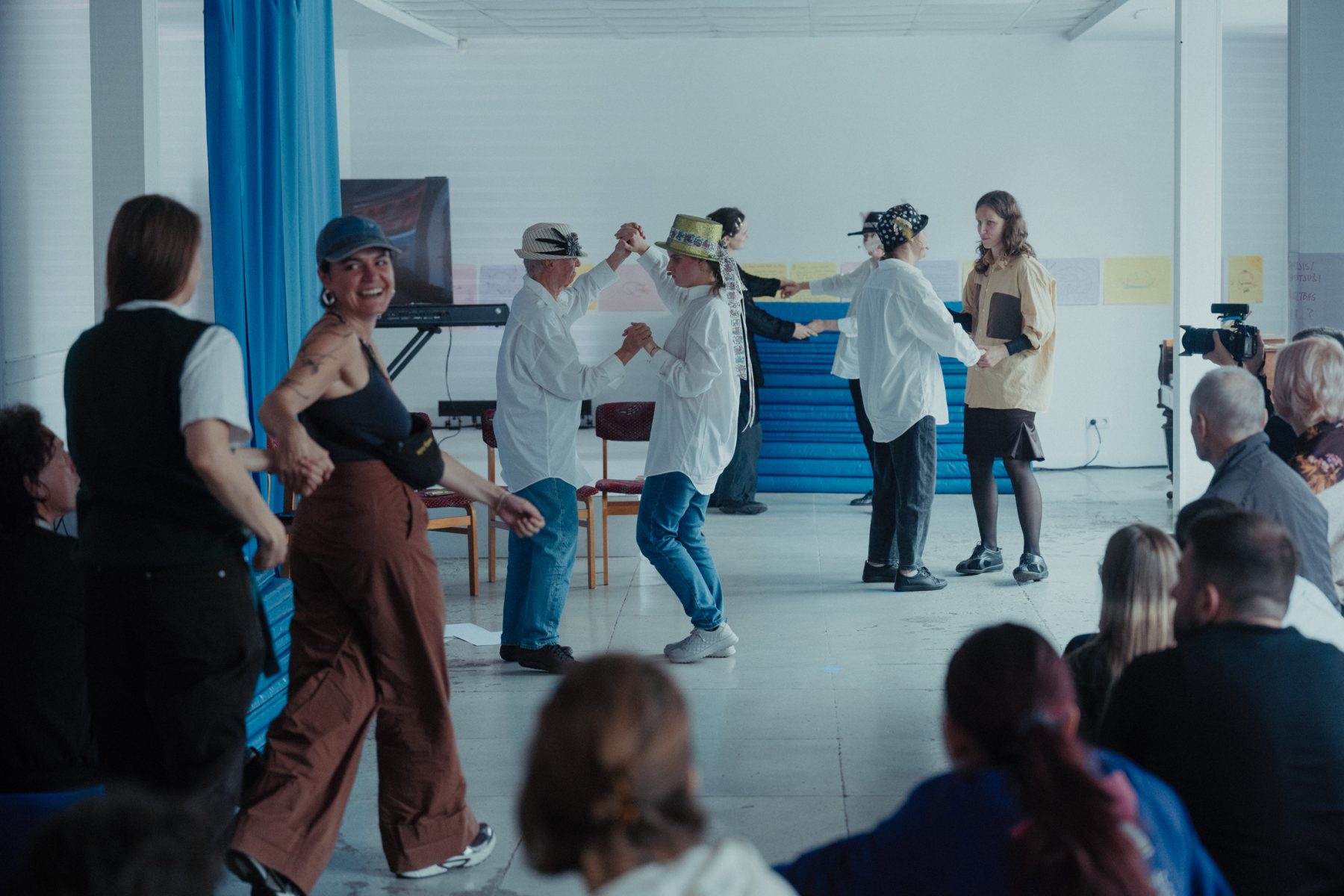
A Concert for Deferred Dreams grew out of an ongoing collaboration between the New Theatre Institute of Latvia, the Latvian Association of the Blind and choreographer Laima Jaunzema. Throughout August, four women – Agnese, Jeļena, Zane Juniore and Zane Seniore / Zane Vecmāmiņa – met with Laima three times a week as part of an international Magic Carpets platform residency. The process began with a question: if you had a space where you could do anything creative you wanted, what would you do? What would happen there?
The answer was not predetermined. Through conversations, experiments, detours and shared discoveries, the participants gradually shaped their own event. Laima described her role as that of a sponge: absorbing what emerged from the group while offering frameworks, rules of the game and situations in which ideas could begin to move. The result was not an artwork imposed on the participants, but something that took shape through their ideas, decisions, time, courage and willingness to show up for one another.
The four performers shared their creative dreams, interests and aspirations, but also spoke openly about the realities and difficulties of pursuing them. They did not conceal or romanticise what it means to step onto a stage or become part of a wider artistic community as blind or visually impaired women. Their reflections extended beyond the artistic process into everyday life, addressing the challenges of studying at university, navigating higher education, visiting institutions and carrying out seemingly ordinary activities in environments that are not always designed with their needs in mind.
The concert therefore became more than a space for sharing dreams. It also revealed the distance between the freedom we imagine art can offer and the barriers that remain in education, cultural institutions and society. Hierarchies, elitism and stereotypes do not disappear at the entrance to an art school, theatre or festival. They can be reproduced through expectations about who can become an artist, what kinds of bodies and experiences belong on stage, what counts as artistic knowledge, and what audiences and fellow artists are prepared to recognise.
This tension was particularly present within the wider programme of Homo Novus. Several other festival activities also developed in connection with the visually impaired community. Workshops on audio description offered opportunities to explore how performances can be made accessible, while performances incorporating audio description and tactile maps allowed blind and visually impaired spectators to experience works through different sensory routes. Alongside these initiatives, the residency offered another kind of possibility: not only to experience art as an audience member, but also to create it, perform it and decide what kind of art one wants to make.
Together, these activities formed a rhizome of connections, encounters and possibilities for participation. Rather than treating accessibility as a single solution or a separate programme, they opened up different ways of engaging with artistic practice and the festival itself – as spectators, participants, performers, thinkers and creators. They also invited a broader reconsideration of what inclusion in the arts might mean: not simply making existing formats accessible, but allowing different experiences and perspectives to shape the formats themselves.
A Concert for Deferred Dreams was touching, joyful and liberating. It did not offer a romanticised image of inclusion, nor did it suggest that artistic participation alone can dissolve the inequalities people encounter in everyday life. Instead, it created space for these realities to be voiced, while allowing the performers to take pleasure in their own creative agency. It asked what might become possible if we stopped assuming in advance what a person can do, what art should look like or whose dreams deserve to be taken seriously.
Perhaps a concert is not necessarily an arrangement of harmonious parts. Perhaps it is also a space where different voices, experiences and desires can meet – where they can disagree, surprise one another and create something that none of them could have made alone.